Sellbase
Open source commerce in your own Supabase: catalog, checkout, orders and bookings, run by your AI.
Runs on your machine from its package; the steps are below.
What it does
- Reads
- Writes
- High impact
Not assessed yet.
What it costs
FreeOdel charges nothing per call. The publisher may charge for its own service.
Runs locally over stdio
This server isn't hosted — your MCP client launches it from a package registry. Use one of the commands below, or drop the config into your client (e.g. Claude Desktop).
Run
npx -y sellbase
MCP client config
{
  "mcpServers": {
    "sellbase": {
      "command": "npx",
      "args": [
        "-y",
        "sellbase"
      ]
    }
  }
}
Sellbase
An open source Shopify alternative you drop into your existing project, run by your AI agent.
Add products, a cart, Stripe checkout and an admin to the Next.js, React or plain HTML site you already have, on the Supabase you already use, with one command: npx sellbase init. Also included: orders, inventory, abandoned carts, discounts, appointments, emails, an API and an MCP server.
Quick start · Features · Docs · Deploy · Contributing · Español
Why Sellbase
- Yours, end to end. Your data lives in your Postgres, your money goes to your Stripe account and your code stays in your repo. There is no platform fee, no lock-in and no Sellbase servers in between. MIT licensed.
- AI-first.
sellbase initwritesCLAUDE.md/AGENTS.md, skills and an MCP server. Tell your agent "set up my store" and it creates products, connects payments and runs a test purchase. Money and destructive actions always ask the owner first, and everything is logged. - Works on any site.
- Next.js and Vite + React: React components.
- Plain HTML, WordPress, Webflow, Vue, Svelte, Astro, Angular:
<sellbase-*>web components (13 KB gzipped) and a static admin.
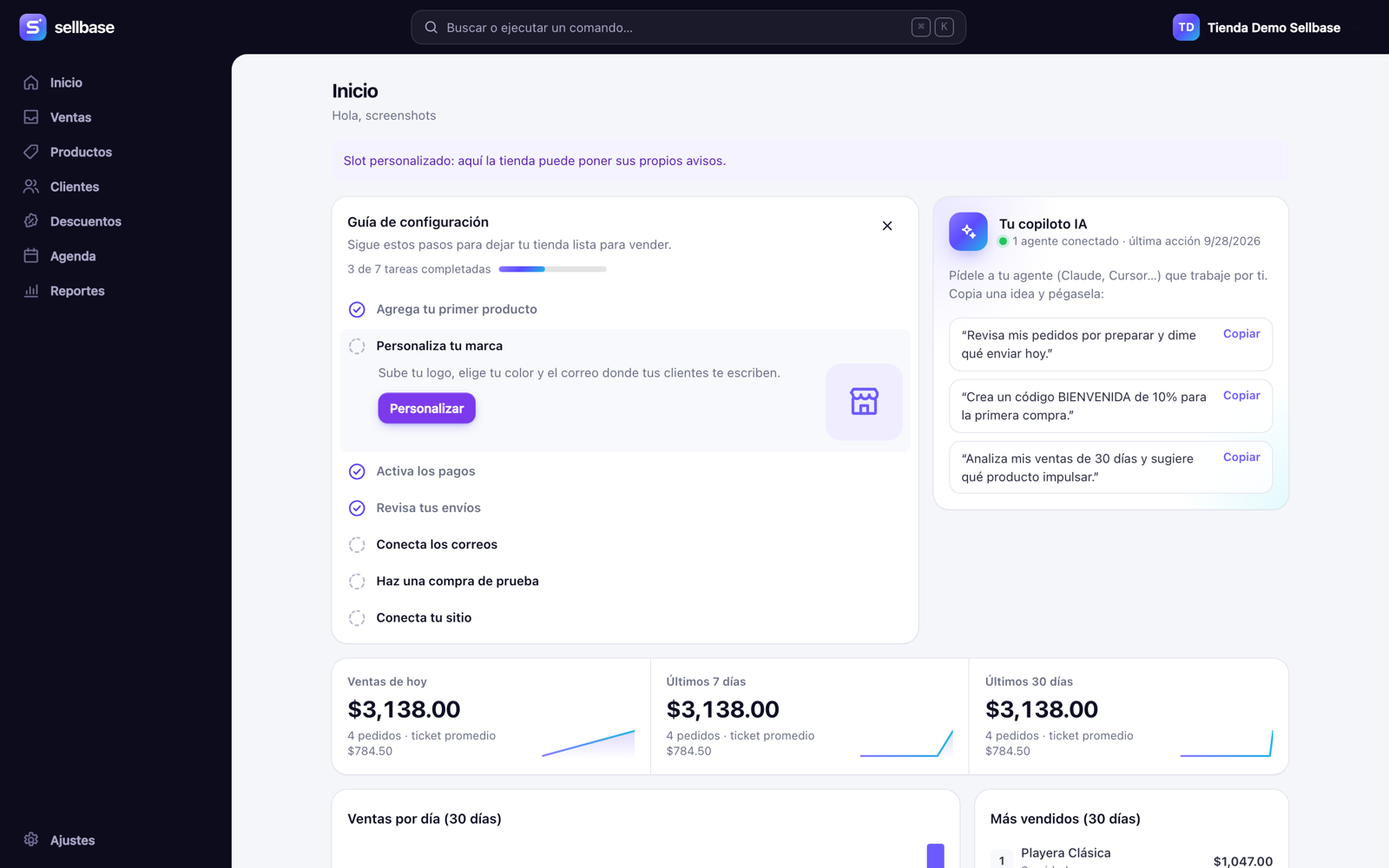
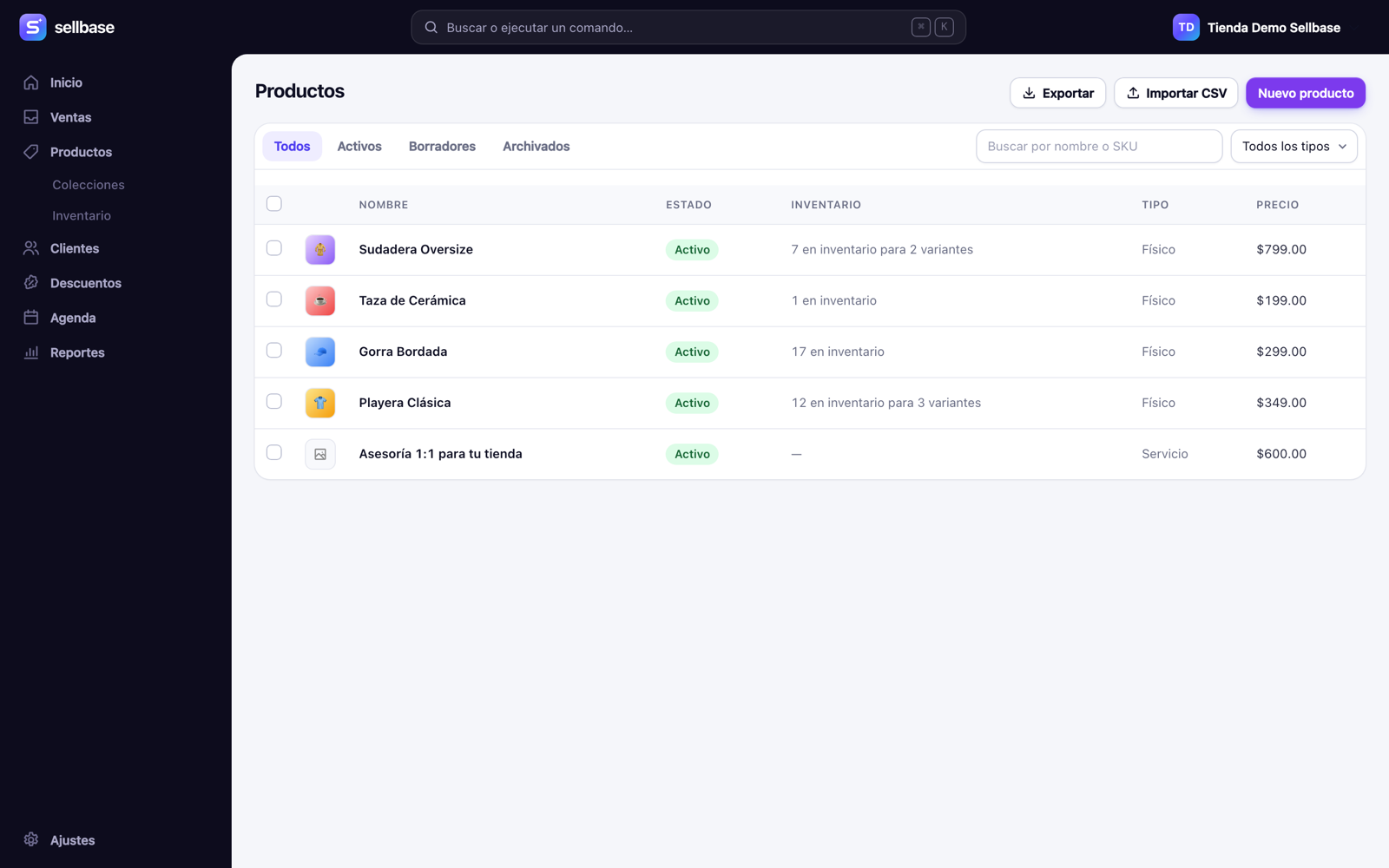
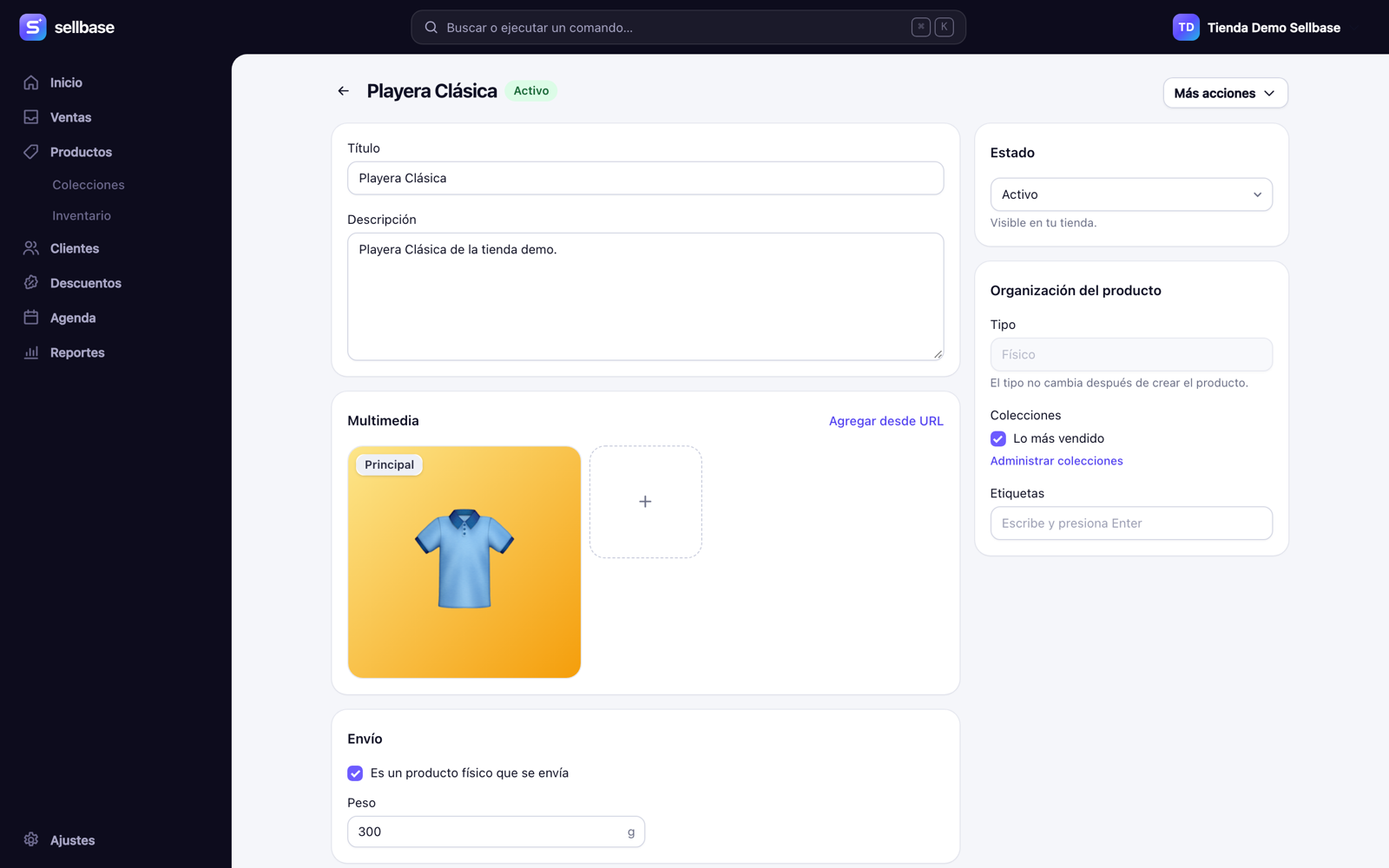
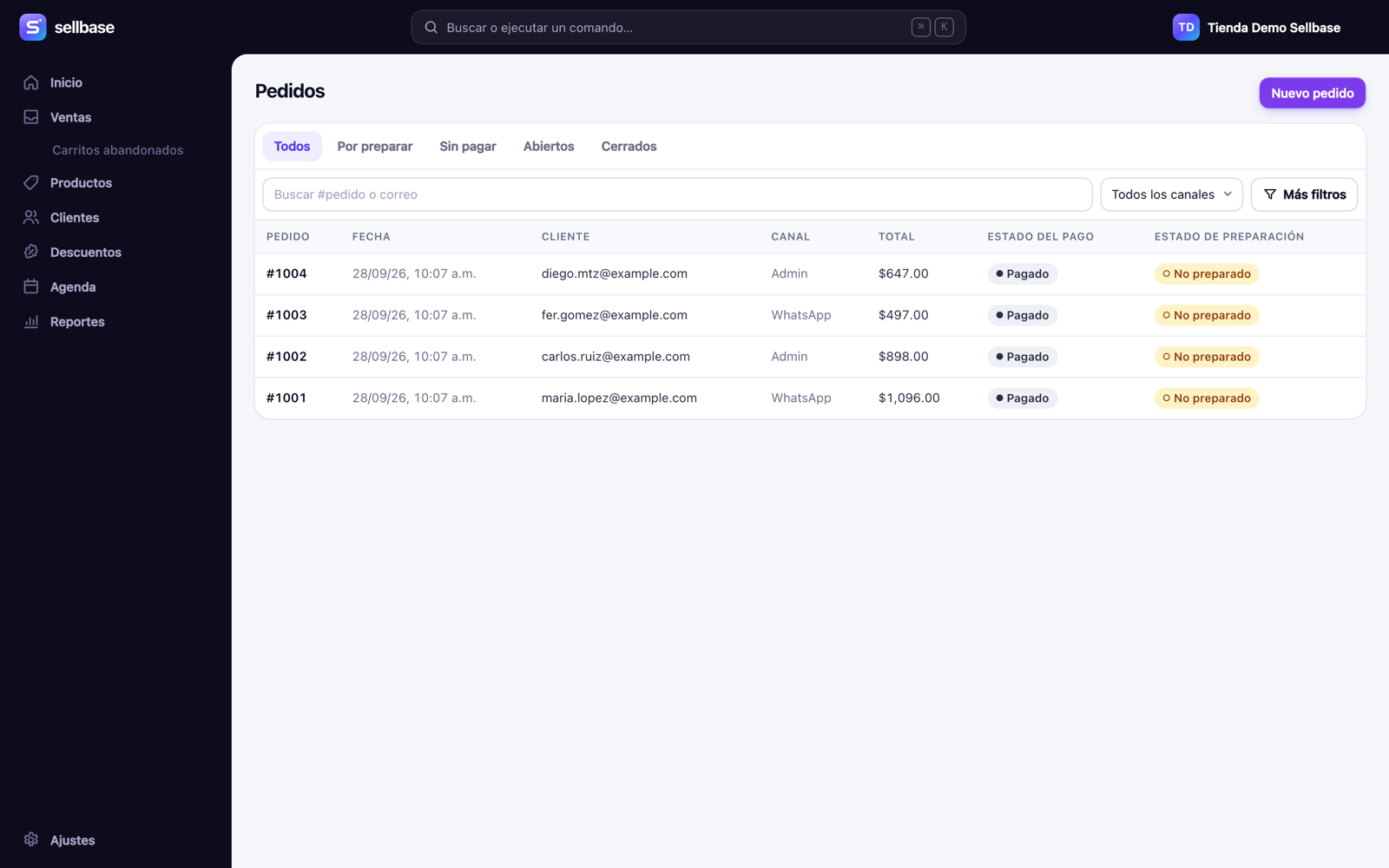
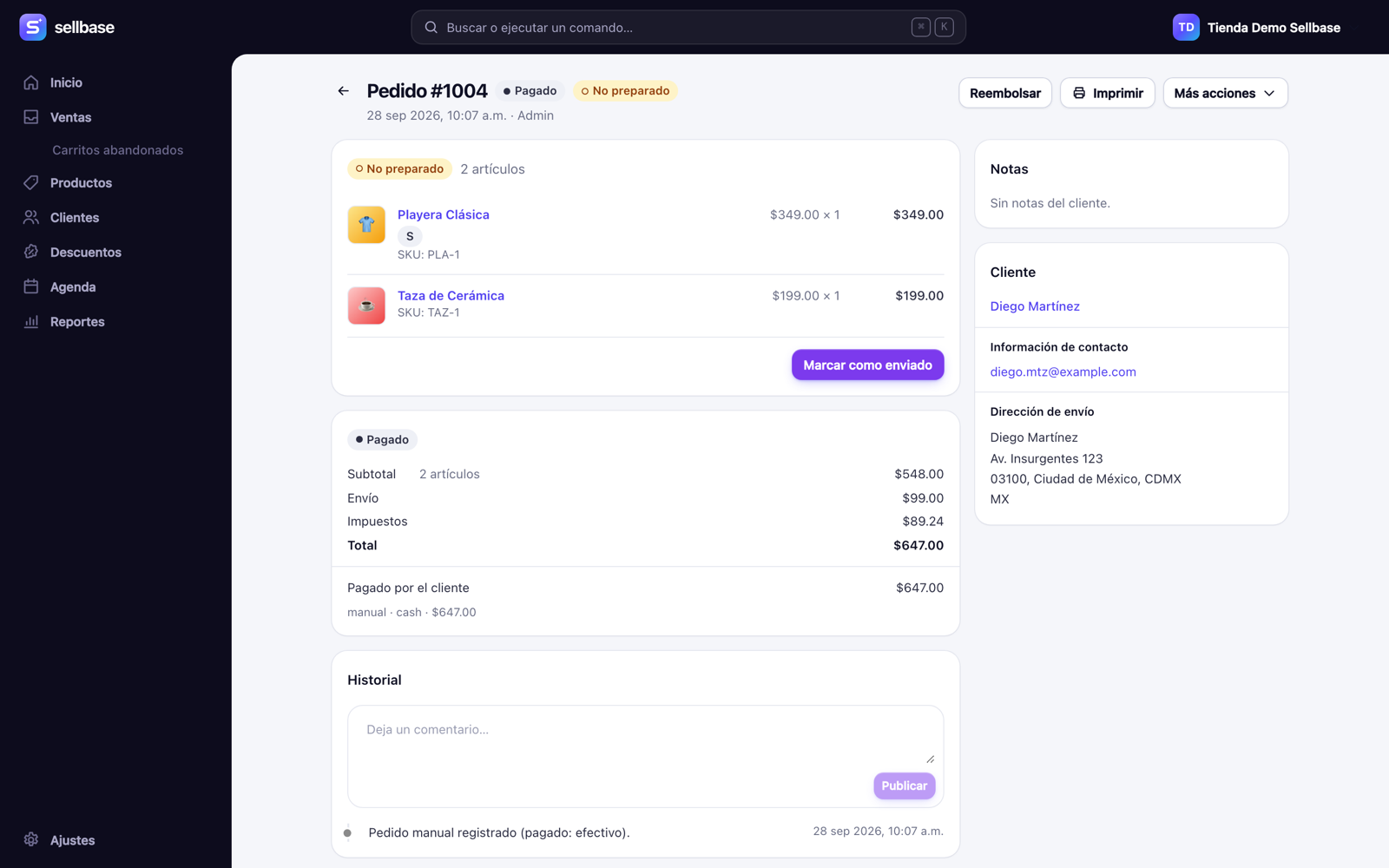
- An admin that is a pleasure to use. Products with drag and drop photos and variants, inventory, orders with packing slips and refunds, abandoned cart recovery, customers, discounts and settings for every connection. Also:
- a command palette (⌘K) to search and act;
- an AI copilot on Home;
- built for store owners, not developers.
- Safe by default.
- Money stored as integers.
- RLS on every table, with tests.
- Orders only come from verified payment webhooks.
- Idempotent writes.
- Third-party secrets in Supabase Vault.
- Signed outbound webhooks that never reach private networks.
Sellbase or build it yourself?
The usual way to add a store to a Next.js + Supabase app is to write it by hand: a products table, a cart, a Server Action for Stripe Checkout and a webhook route. It works for the first sale. Sellbase is that same stack (your Supabase and your Stripe) with the rest already built and tested.
| By hand (Supabase + Stripe) | Sellbase | |
|---|---|---|
| Setup | 5–6 files to write and keep correct | npx sellbase init |
| Runs in your existing app and Supabase | Yes | Yes: its own sellbase schema, no extra server |
| Admin for the owner | Supabase dashboard, or build one | /admin: products, photos, variants, orders, refunds, discounts |
| Inventory, variants, shipping rates, taxes, discounts | Build each one | Included |
| Orders created only by the verified webhook, idempotent | Up to you | Built in, with tests |
| Emails, abandoned cart recovery, refunds | Build each one | Included |
| Your AI agent can run the store (create products, check orders…) | No | MCP server with 31 tools; money and destructive actions ask the owner |
Unlike engines such as Medusa, Vendure or Saleor, Sellbase needs no separate backend server. It runs on Supabase Edge Functions next to your app, and the storefront components are copied into your repo for you to edit.
Quick start
Requirements: Node 20+ and a Supabase project (or the local stack with Docker).
npx supabase start          # local stack (or pass --supabase-url … for a hosted project)
npx sellbase init --yes     # schema, Edge Functions, store, owner, admin, components, agent files
Then:
- Admin: open
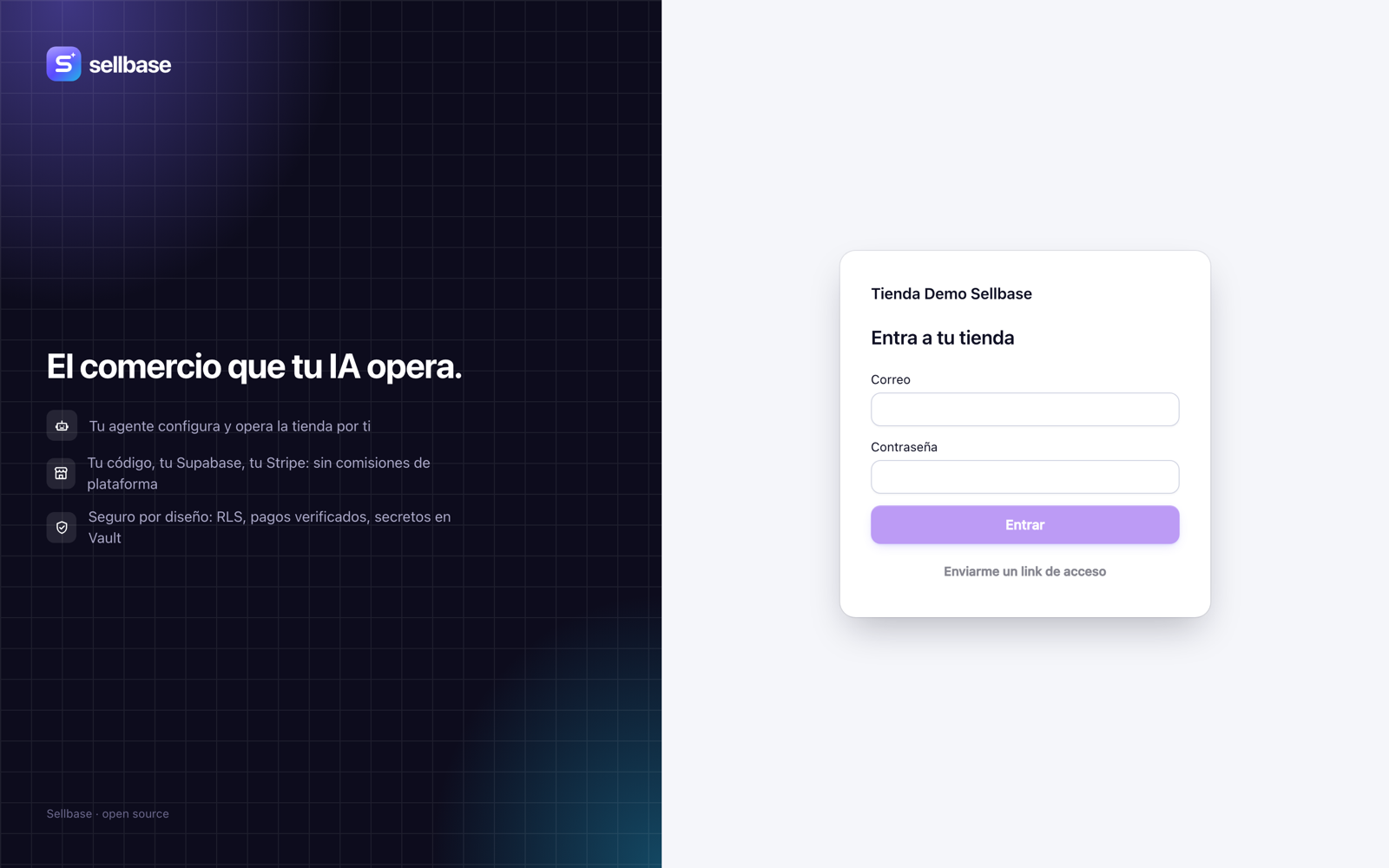
/adminand sign in. Locally, the owner's email and password are in.env.sellbase. - Setup: follow the setup guide on Home.
- Or let your agent do it: open it in the project and say "Configura mi tienda con Sellbase" / "Set up my store with Sellbase". It uses the
sellbaseMCP tools until a test purchase succeeds.
npx sellbase doctor         # checklist with the next step for anything missing
npx sellbase upgrade        # new versions: dry run, backup, migrations, functions, components
Start from a template
npx sellbase create my-store --template nextjs   # Next.js store with the admin at /admin
npx sellbase create my-landing --template html   # plain HTML landing page, no build step
Both are in examples/ with Vercel and Netlify deploy buttons.
With Claude Code
/plugin marketplace add jlgavel011/sellbase
/plugin install sellbase@sellbase
/sellbase:setup I sell handmade candles, $250 MXN each, shipping $120
The plugin brings the Sellbase skills and MCP server to every project. /sellbase:setup installs Sellbase, creates your products, connects Stripe in test mode and runs a test purchase. Any other MCP client can use npx sellbase mcp (listed in the MCP registry as io.github.jlgavel011/sellbase).
With any agent (Cursor, Codex, Copilot, Gemini CLI, Windsurf…)
npx skills add jlgavel011/sellbase # the Sellbase skills, including add-ecommerce
Then ask your agent to "add a store to this project". The add-ecommerce skill installs Sellbase and sets it up.
With shadcn
The storefront components are also a shadcn-compatible registry:
npx shadcn add https://jlgavel011.github.io/sellbase/r/store.json          # everything
npx shadcn add https://jlgavel011.github.io/sellbase/r/product-grid.json   # or one component
They still need the backend: npx sellbase init --yes. The index is at /r/registry.json.
Going live: deploy guide and live payments with Stripe.
Features
 |  |
 |  |
 |  |
Catalog:
- physical products, digital downloads and services with appointments;
- up to 3 options per product (size, color…) with a variant matrix, compare-at prices and SEO;
- collections, tags and stock per variant;
- CSV import (including Shopify exports) and export;
- bulk price changes with a preview.
Checkout:
- Stripe Checkout (cards, Apple Pay, Google Pay; test and live mode);
- shipping rates, free shipping thresholds and local pickup;
- inclusive or exclusive taxes;
- discount codes and automatic discounts;
- deposits for services;
- a required consent checkbox (e.g. 18+ for alcohol) enforced by the server and stored with the order.
Orders:
- payment and fulfillment statuses;
- shipping with carrier and tracking;
- full or partial refunds;
- cancellations with restock;
- a timeline with comments;
- printable packing slips;
- manual orders (cash, transfer, WhatsApp) and payment links.
Growth:
- abandoned checkouts with one-click or automatic recovery emails that restore the cart;
- customers with their history;
- sales metrics and best sellers.
Services:
- resources with weekly hours and exceptions;
- availability;
- bookings with reminders (24 h and 2 h before) and calendar invites.
Emails (Resend): order confirmation with download links, shipping updates, refunds, cancellations, appointment notices and cart recovery. All of them carry your logo and brand color.
Team and AI:
- staff roles and invitations;
- API tokens with scopes for agents (money and data export scopes are opt-in);
- an activity log;
- signed outbound webhooks with retries for your ERP, spreadsheets or Zapier.
Storefront:
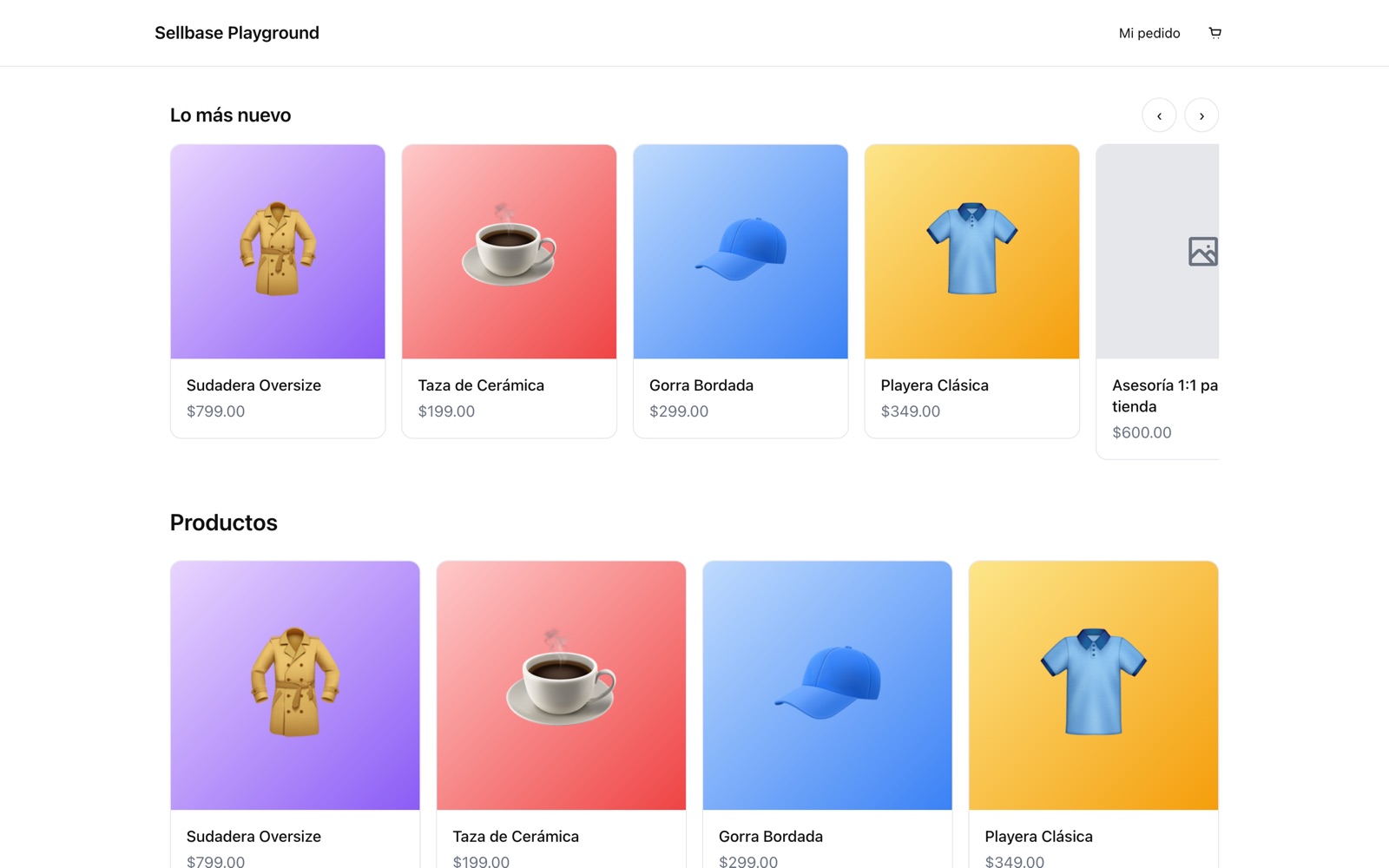
- React components copied into your repo (edit freely);
- headless hooks;
- web components for any site;
- SEO helpers (JSON-LD, sitemap);
- order lookup and download pages;
- accessible markup (checked with axe).
How it works
your site ──(@sellbase/react or <sellbase-*> web components)──┐
/admin (@sellbase/admin) ─────────────────────────────────────┤
your AI agent ──(sellbase MCP server)─────────────────────────┤
                                                              ▼
                    Supabase: Edge Functions (sellbase-api, -webhooks, -jobs)
                              Postgres schema `sellbase` (RLS) · Vault · Storage · pg_cron
                                                              │
                                   Stripe · Resend · your webhooks
- One API contract. Every route is declared once with Zod in
@sellbase/core. The Hono server validates with it, the OpenAPI spec and the typed SDK come from it, and the MCP tools reuse it. - Snapshots. Orders keep a copy of prices, titles and addresses, so later catalog changes never alter past orders.
- The outbox. Business events are written in the same transaction as the change; jobs deliver emails and webhooks from it.
| Package | What it is |
|---|---|
sellbase | CLI: init, doctor, upgrade, add, seed, token, mcp |
@sellbase/admin | The admin (React), also shipped as a static page |
@sellbase/react | Provider and hooks for storefronts |
@sellbase/web | Web components for any site |
@sellbase/sdk | Typed API client and SEO helpers |
@sellbase/mcp | MCP server for AI agents |
@sellbase/core | Schemas, API contracts, pricing, state machines |
Documentation
- Getting started (español)
- Add an ecommerce store to a Next.js app with Supabase (en español)
- Deploy to production
- Customize the admin
- Live payments with Stripe (español)
- API reference, plus
llms.txtandllms-full.txtfor agents - Specification and architecture decisions
- Changelog
Development
pnpm i
pnpm exec supabase start && node scripts/seed-demo.mjs
pnpm dev                    # playground on http://localhost:3100 (admin at /admin)
pnpm lint && pnpm typecheck && pnpm test
pnpm test:db                # pgTAP
pnpm test:integration       # API against the local database
pnpm test:e2e               # Playwright
node scripts/acceptance.mjs # clean project → init → agent over MCP → test purchase
See CONTRIBUTING.md. Security issues: SECURITY.md.
Status
Sellbase is 0.3, young but complete. The full flow is covered by CI on every commit:
- pgTAP;
- API integration;
- Playwright end to end;
- a clean-install acceptance test with a real agent over MCP.
Next on the roadmap:
- an installation guide per hosting provider;
- more payment providers (Mercado Pago, OXXO via Stripe);
- shipping label integrations;
- invoicing (CFDI).
En español
Sellbase es un kit de comercio open source que se instala dentro de tu proyecto (tu repo y tu Supabase) y que tu agente de IA puede configurar y operar.
Qué incluye:
- catálogo con fotos y variantes;
- checkout con Stripe;
- pedidos, inventario y carritos abandonados;
- descuentos, citas y correos;
- un admin completo en
/admin; - una API y un servidor MCP.
Funciona en Next.js, Vite + React y en cualquier sitio (HTML puro, WordPress, Webflow…) con componentes web.
npx supabase start
npx sellbase init --yes
Después entra a /admin (en local, el usuario y la contraseña quedan en .env.sellbase) o dile a tu agente: "Configura mi tienda con Sellbase".
Guías: primeros pasos, cobrar de verdad con Stripe y despliegue.