Listed from the MCP registry; nobody on Odel publishes it.

Threesmith
three.js for coding agents: pinned API, review, upgrades, release compare, headless runs, 3D models.
Runs on your machine from its package; the steps are below.
What it does
- Reads
- Writes
- High impact
At most: moves money, runs code or commands, deletes data, or sends messages for you.
What it costs
FreeOdel charges nothing per call. The publisher may charge for its own service.
Runs locally over stdio
This server isn't hosted — your MCP client launches it from a package registry. Use one of the commands below, or drop the config into your client (e.g. Claude Desktop).
Run
npx -y threesmith
MCP client config
{
  "mcpServers": {
    "threesmith": {
      "command": "npx",
      "args": [
        "-y",
        "threesmith"
      ]
    }
  }
}

Threesmith
Less debugging. More dimension.
MCP server, CLI and Claude Code plugin. Works with Claude Code, Codex, Cursor, VS Code, Gemini CLI and any MCP client.








Website · Install in your agent · 3D models · Example · Changelog
Explore the interactive model preview, toolkit and real before-and-after demo.
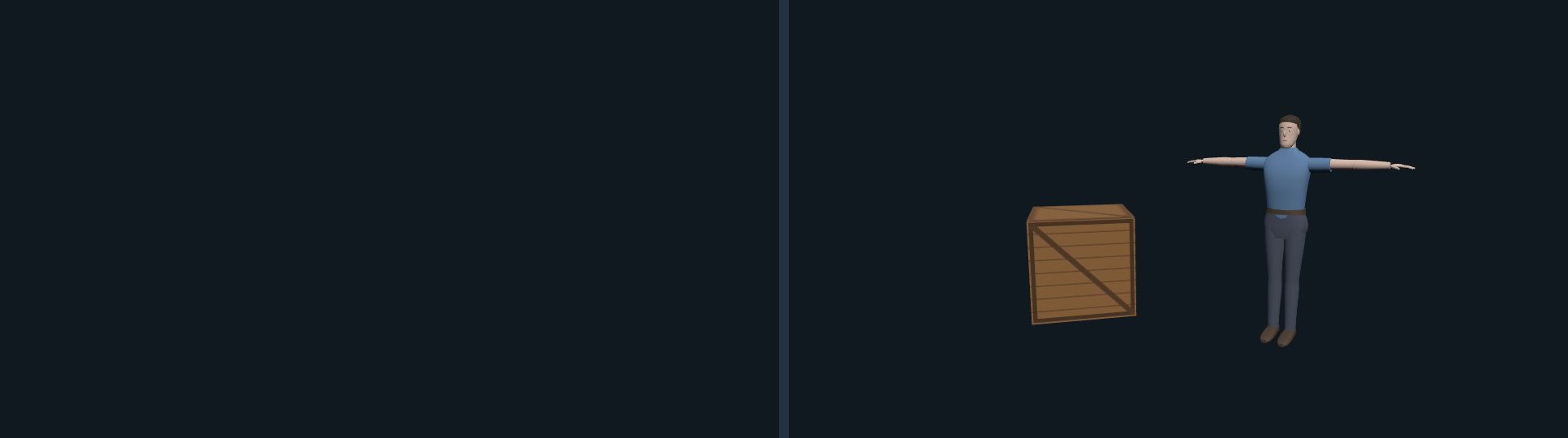
Real run on examples/agent-mistakes: as the agent wrote it (3 review errors, 2 asset paths that 404, a black canvas), and after threesmith fix plus the fixes threesmith doctor listed (100/100, check passes).
three.js ships a release almost every month and removes old APIs. Coding agents learned it from years of code that used
THREE.Geometry, outputEncoding, three/examples/js and import paths that no longer exist, and they cannot see the
canvas they draw on. Threesmith is the check between the agent and your project: the API of the three version you
have installed, a scored review, the assets and decoders the code needs, the page run in headless Chromium with the
frame measured object by object, and safe, undoable edits. Everything runs locally; nothing leaves the machine
(three_compare fetches another three release from npm, only when you ask for one).
New in 0.5: a library of 1000 models
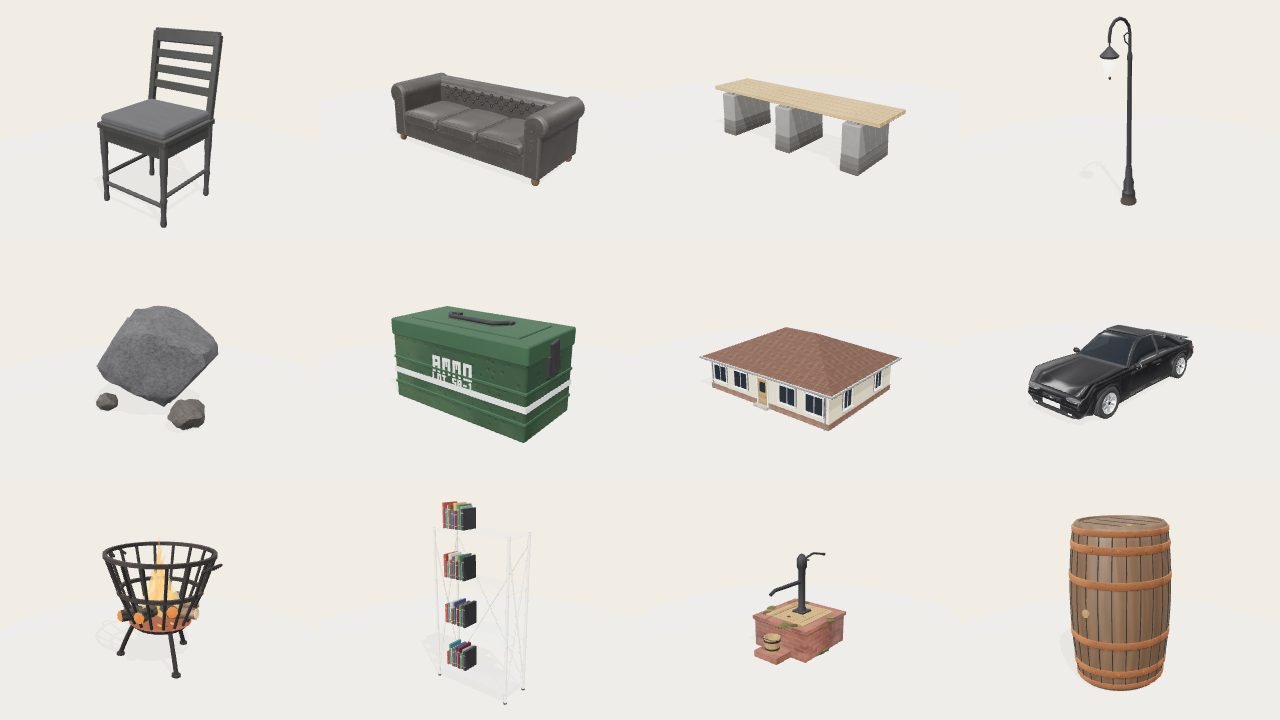
Library models built by threesmith model build <id> and rendered by three.js. See all 1000.
- 1000 ready-made base models in seven groups: furniture, street, storage, nature, buildings, vehicles and props.
three_model_librarysearches them in English or Dutch ("oak chair", "eiken stoel"). - Build by id, change by parameter.
three_model_buildwithkind: "furniture/dining-chair-oak-ladder", ormodel build <id> --param seatHeight=0.5. Or print the spec and make it your own. - Every one checked: a clean
.glbthat passes the model lint and the check against what it is, at its defaults and at the ends of its parameters. The list as text: LIBRARY.md.
New in 0.4: it reads the frame
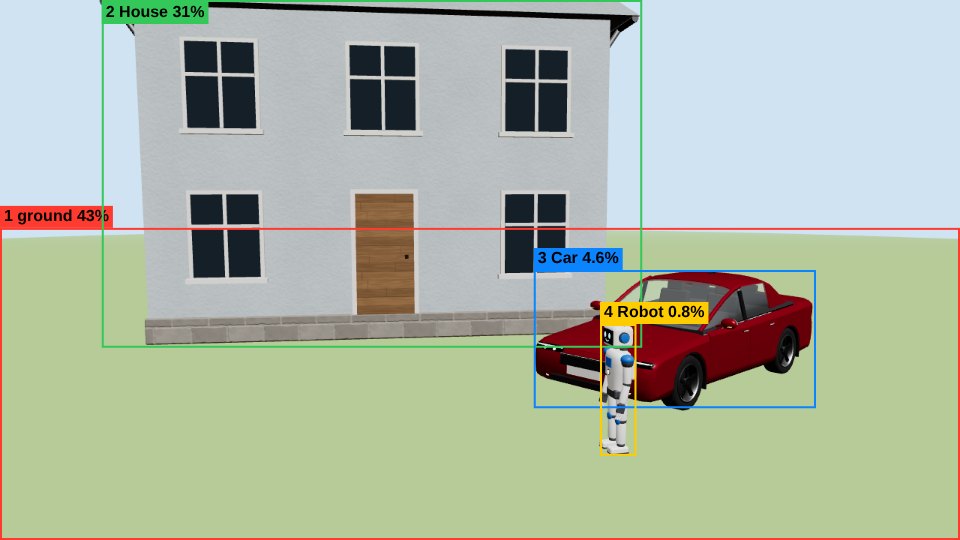
Real output of threesmith look --annotate on three models Threesmith built. The boxes come from the pixels each object really shows.
- See the frame as numbers.
three_lookrenders with and without each object: how much of the frame it shows, where, cut by the edge, hidden behind what, too dark. Claims such as"car visible >= 5%"pass or fail. - Tune it live, keep it in code.
three_tunechanges a light, a colour or the camera in the running page, then writes each value where your code sets it, as one undoable step. - Animation, TSL and motion.
three_animationsays why a clip does not play and finds feet that sink into the floor;three_tslcatchesuv().x * 8andifon a node;three_capturerecords frames on a virtual clock. - Prove the whole change.
three_impactfollows the diff to the pages and tests that run it; in CI the receipt says what changed between two three releases and why. - And:
three_model_code(the module or R3F component for a.glb),three_dream(learns from past sessions on your machine),three_sessionwithcdp(your own Chrome, the real GPU). See the changelog.
Without and with
| Your agent... | On its own | With Threesmith |
|---|---|---|
| writes three.js | Geometry, outputEncoding, BoxBufferGeometry, examples/js: old habits | 104 rules pinned to the installed release flag each line with the fix; fix does the 23 pure renames |
| calls an API | guesses a name or an import path from memory | three_api reads node_modules/three: signature, deprecation and the right three/addons/... path |
| writes a shader | #include <encodings_fragment>, gl_FragColor with GLSL3, a .replace() on a chunk that is gone | includes checked against the installed ShaderChunk, patches that silently do nothing found, renames fixed |
| loads a model | /models/Car.glb that is a 404 on Linux, Draco without a decoder | three_assets resolves every path like the server does; three_decoders wires the decoders from the installed three |
| says "it works" | never opened the page | three_check opens it headless: errors with causes, blank frames, a screenshot, baselines |
| gets a black screen | guesses: more light? move the camera? | three_inspect reads the live scene and says why each object is not visible |
| says "it looks right" | cannot see the picture it made | three_look measures each object's share of the frame, place, cut and hidden parts; claims pass or fail |
| tweaks the look | guesses a number, edits, reloads, guesses again | three_tune changes it live in the running page, then writes the value where the code sets it |
| animates a model | a T-pose, a clip that never plays, feet in the floor | three_animation says why, poses the model at any time and sweeps a clip for the lowest point |
| writes TSL | uv().x * 8 and if on a node, as if it were GLSL | three_tsl finds them, and shows the node graph and the shader three generated in the page |
| fixes a bug | cannot show it was there, or that it is gone | three_play runs steps and judges claims frame by frame; three_scenario keeps it as a regression test |
| makes it fast | changes things and hopes | three_perf counts draw calls, triangles and programs against a budget and the last run; three_leaks names what is never disposed |
| upgrades three | merges the "bump three" PR blind | three_compare runs your page on both releases and says what changed (console, scene, draw calls, light per object), each change with the migration note that explains it |
| ships it | builds once, deploys, sees a 404 | three_build builds, finds two copies of three, missing assets and sub-path URLs, then opens the built page |
| needs a 3D model | needs Blender or a placeholder cube | three_model_build makes a clean .glb from one of 110 kinds or 1000 library models, then shows it as text views and lints it |
| finishes a change | checks the file it touched, not the pages that run it | three_impact names what the change touches, which pages and tests run it, and the checks that prove it |
| does not know the project | reads twenty files | three_scan and three_doctor give the map and the order to fix things in one call |
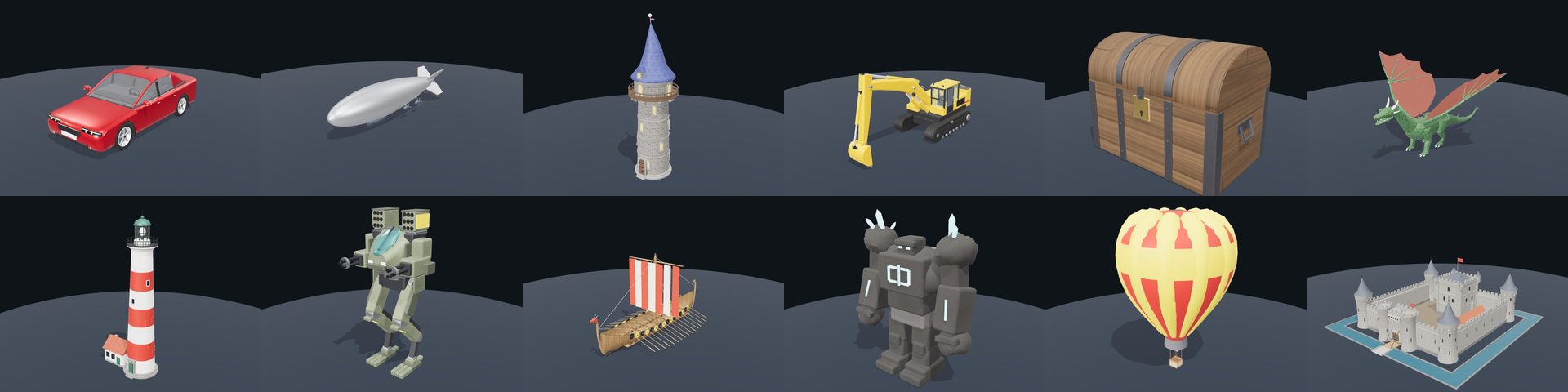
3D models from code, no Blender: 110 ready-made kinds and a library of 1000 base models (see LIBRARY.md), from cars and airships to swords, teapots and golems, rendered here by three.js itself. See all
Quickstart
1. See what is wrong. Nothing to install but the package:
npx -y threesmith doctor          # what is wrong, grouped by cause, most urgent first, with next steps
npx -y threesmith review          # score 0-100, `file:line severity [rule] message Fix: ...`
npx -y threesmith check .         # open the page headless, errors and a screenshot
2. Give it to your agent. In Claude Code:
/plugin marketplace add laaielichter/Threesmith
/plugin install threesmith@threesmith
3. Ask for something. "Find out why the scene is black and fix it." Every three.js file Claude edits is reviewed right after the edit, its errors and broken asset paths go straight back to Claude, and the session starts with a brief of the project.
Install in your agent
| Client | How |
|---|---|
| Claude Code | /plugin install threesmith@threesmith after /plugin marketplace add laaielichter/Threesmith (MCP server, hooks incl. protected paths, 12 skills, 3 subagents, settings for tool sets and read-only) |
| Claude Code, MCP only | claude mcp add threesmith -- npx -y threesmith mcp |
| Codex | codex mcp add threesmith -- npx -y threesmith mcp --tier premium |
| Cursor, VS Code | the buttons at the top |
| Gemini CLI | gemini extensions install https://github.com/laaielichter/Threesmith |
| Cline and others | llms-install.md, or { "mcpServers": { "threesmith": { "command": "npx", "args": ["-y", "threesmith", "mcp"] } } } |
| Docker | Dockerfile |
Run the agent from the project folder, or pass --project <path>. Needs Node.js 22.12+ and three installed in the
project. The browser tools need playwright-core and a Chromium (npx playwright-core install chromium);
threesmith doctor --env shows what is missing.
Clients without the plugin still get its workflows: the server offers the prompts threesmith-doctor (start with
the doctor, fix in its order) and threesmith-<skill> for each skill (debug, review, perf, ship, model,
upgrade, webgpu, learn, dream, tune), and every skill as a resource (threesmith://skills/<name>, Markdown).
Made for agents: cheap calls, exact answers
- Two profiles.
--tier cheap(the default) gives short, capped output and numbered step-by-step instructions, so small models follow the right order;--tier premiumgives full detail for large models. - Tool sets.
--tools coreloads 18 tools; addrun,live,build,modelwhen you need them, or name single tools. A tool list the client pays for in every turn stays small. The server instructions only ever name tools that are loaded. - Lean mode.
--leanoffers two tools instead of 45:threeruns any tool by name ({"tool": "review", "args": {"only_new": true}}) andthree_helpgives a tool's parameters when they are needed. Same tools, same results, same read-only refusals; the tool list drops from about 22,000 to about 2,600 tokens (estimated at 4 characters per token;threesmith mcp --statsprints the numbers for your options). - Fix loops that cost less.
three_reviewwithonly_new: trueshows new findings in full, the ones the agent already saw as one short line, and how many are fixed.code+filereviews code before it is saved. - Structured results. Review, check and doctor return
structuredContentwith an output schema next to the text. - One line per finding.
file:line severity [rule] message Fix: ..., the same in the CLI (--compact), MCP and hooks. - Safe writes. Every write (fix, model build, scenario save) is one journal entry that
three_undotakes back; a file changed by hand since is left alone."protect"inthreesmith.json(orTHREESMITH_PROTECT) names folders no write may touch.--read-onlyleaves out the tools that always write and refuses write options. - It learns, locally. A finding marked as a false alarm with
three_feedbackis hidden from then on; lessons kept withthree_lesson_addcome back under the same error.three_dreamlooks back at past sessions and proposes project hints and lesson changes, each with its evidence. Only hashes, counters and scrubbed text, on this machine.
The 45 tools
core · read files, answer, fix
| Tool | What it does |
|---|---|
three_doctor | Start here: what is wrong, grouped by cause, most urgent first, with numbered next steps |
three_scan | The project map: bundler, framework, three versions, pages, import maps, renderer settings, assets |
three_api | The exact API in the installed three: signature, deprecation, import path, did-you-mean |
three_search | Classes, constants and members by part of a name |
three_review | Score 0-100 from 104 rules pinned to the installed release; only_new for fix loops, code for unsaved code |
three_types | The project's own tsc --noEmit, each three.js type error answered from the installed release |
three_fix | The renames that mean exactly the same, dry run first, undoable |
three_migrate | Upgrade plan per release (r120 to r188) with file:line, what will look different, a WebGPU readiness report and undoable rewrites |
three_impact | What a change touches in the scene, the pages and tests that run it through the import graph, and the checks that prove it |
three_tsl | TSL: Fn, uniforms and node slots with their mistakes (uv().x * 8, if on a node); the node graph and generated shader from the page |
three_explain | Cause and fix of a console, build or test message (41 kinds) |
three_lessons | 103 lessons from real three.js and R3F projects by error, words, rule or topic |
three_lesson_add | Keep a lesson learned here, scrubbed of names, paths and code |
three_rules | Every review rule with its category, release gating and fix |
three_feedback | Mark a finding as a false alarm (hidden from then on) or right |
three_dream | Learns from past sessions on this machine: project hints, draft lessons, noisy rules, each with its evidence; applied only when you say so |
three_undo | Undo the last Threesmith writes, newest first |
three_version | Which three release is installed |
run · open the page headless
| Tool | What it does |
|---|---|
three_check | The page in headless Chromium: errors with causes, shader errors at your line, failed requests, blank frames, screenshot, baselines |
three_inspect | The live scene graph, draw calls, GPU memory, and why each object is not visible |
three_look | The frame as numbers per object: share, place, cut, hidden by what, too dark; claims, and an annotated screenshot |
three_capture | Frames 1/fps apart on a virtual clock: a contact sheet, still scenes and pops, an .mp4 with ffmpeg |
three_play | Steps (click, press, drag, frames, until), watched values and claims judged frame by frame; seed makes runs repeatable |
three_scenario | Keep a passing play run as a regression test; ci runs them and writes JUnit |
three_perf | Draw calls, triangles, programs and frame times against a budget and the last run, the cost per object, instancing candidates |
three_device | The page as on a phone, tablet or low-end laptop: texture limits, memory budget, pixel ratio, context loss |
three_leaks | Repeat a cycle and report what grows, down to GPU resources never disposed |
three_compare | The same page on two three releases, each change with the migration note that explains it; bisect finds the release |
live · a page kept running
| Tool | What it does |
|---|---|
three_session | A page kept open between calls, headless or your own Chrome (cdp) with the real GPU |
three_page | Drive it without reloading: eval, steps, screenshot, inspect, look, textures (colour-space and size mistakes), diff |
three_tune | Change a value live (light, colour, camera, exposure, material), then save it where the code sets it, undoable |
three_animation | Clips of a .glb; live mixers and why a clip does not play; play, pose and sweep for feet in the floor |
build · assets and the deployed output
| Tool | What it does |
|---|---|
three_assets | Every asset path resolved like the dev server and the host: missing files, wrong capitals, decoders, huge textures |
three_decoders | Draco, KTX2 and meshopt wired with the decoder files of the installed three, undoable |
three_gltf | Khronos validation, and gltf-transform optimisation with before-and-after numbers (optional packages) |
three_build | Run the build, check the output (copies of three, assets, sub-path URLs) and open the built page |
model · 3D models without Blender
| Tool | What it does |
|---|---|
three_model_brief | One page before you build a model: nearest kind, parts, real size, rules, order of tools |
three_model_identify | What a thing is (English or Dutch): parts, pivots, typical size, usual mistakes |
three_model_spec | The JSON model spec, an example, and the 110 ready-made kinds |
three_model_library | 1000 ready-made base models (furniture, street, storage, nature, buildings, vehicles, props), searchable in English or Dutch, each with parameters |
three_model_build | A clean, deterministic .glb from a kind, a library id or a spec, linted |
three_model_view | A .glb as text: front, side and top views, parts with sizes, parts that do not touch |
three_model_lint | Score a .glb for the web, and against what it should be |
three_model_inspect | What is in a .glb and which loaders and decoders it needs, with the setup code |
three_model_code | The code that loads a .glb: an ES module or a React Three Fiber component with its parts, materials and animations |
Every tool explains itself in full to the agent (its MCP description); threesmith <command> --help does the same in the shell.
CLI: threesmith doctor | scan | api | search | review | types | fix | impact | migrate | tsl | rules | dream | undo | lessons | assets | decoders | gltf | check | inspect | look | capture | play | scenario | perf | device | leaks | compare | build | model <inspect|needs|code|view|lint|identify|brief|spec|kinds|recipes|library|build> | explain | ci | hook | mcp. threesmith <command> --help lists the options.
The review
Rules are pinned to the installed release: a removed API is an error on a release that removed it and a warning on an older one; a rule whose replacement does not exist yet in your release stays quiet. The categories:
- api (28): removed or renamed APIs and their releases, symbols that do not exist in the installed version, TSL
names imported from the wrong entry,
three/srcimports, deprecations read from three's own source. - correctness (50): code that renders nothing or the wrong thing — no lights, shadows off, renderer never attached,
render(camera, scene),scene.add(gltf), a mixer never updated,getElapsedTime()andgetDelta()on one clock, instance and attribute updates withoutneedsUpdate, raycasting with window instead of canvas coordinates, controls bound todocument, decoders created but never attached or assigned instead of called, a KTX2 transcoder from a CDN of another three release; shaders:#includechunks that do not exist in the installed release,onBeforeCompilepatches that do nothing, GLSL3 mistakes, redeclared built-ins, uniforms without{ value }, GLSL materials under WebGPU and node materials under WebGL; React Three Fiber: state set inuseFrame, objects made in render. - performance (10): allocations and heavy objects per frame, scene traversal per frame, uncapped pixel ratio, huge shadow maps, many meshes that should be instanced.
- lifecycle (4): no resize handling, removed objects never disposed,
dispose()withoutsuper.dispose(), a page that renders on demand and never draws again after a lost WebGL context. - color (8): colour textures without
colorSpace, colour management off, EffectComposer without OutputPass or with double gamma,envMapIntensitythat has no effect.
An upgrade changes the look on purpose, too. three_migrate lists those changes for the releases you cross, measured
on your code: colour management (r152), physical light units with starting values (r155), light decay 2 (r147), tone
mapping lost in post-processing without an OutputPass (r155), brighter rough PBR materials with their roughness (r181),
fill lights that reflect, with or without scene.environment (r188), and more. Take a three_check baseline before
and compare after: these differences are expected.
It reads text, not types (three_types adds the type checker for TypeScript). The rules are tested against three's
own examples and addons for false alarms. If a finding is wrong: three_feedback, --disable <rule>, or
// threesmith-disable-next-line <rule> (also -disable-line, -disable-file); an issue with the snippet is the most
useful bug report.
GitHub Action
- uses: laaielichter/Threesmith@main
  with:
    min-score: 85
    check: dist          # folder with the built index.html; omit to skip the browser
    baseline: home       # screenshot baseline in .threesmith/baselines/home.png
    comment: true        # post the receipt on the pull request
    compare: previous    # on a three bump: the page on both releases, each change with its migration note
    impact: origin/main  # what the change touches and the checks that prove it (checkout with fetch-depth: 0)
The receipt (review, check, scenarios) appears in the job summary and optionally as a PR comment. Locally or in any
CI: threesmith ci --check dist --compare previous --impact origin/main --junit junit.xml --sarif threesmith.sarif. Commit .threesmith/baselines/ and
.threesmith/scenarios/; the rest of .threesmith/ is local state and ignored by its own .gitignore.
Limits
- WebGL 2 in headless Chromium works in GitHub Actions (SwiftShader software rendering). WebGPU is best effort
(
--webgpu), depending on the runner having an adapter (on Linux: libvulkan and a Vulkan or SwiftShader driver).checknames the backend the page actually drew with (WebGPU,WebGL 2, orWebGL 2 (WebGPU fallback)with a warning) and the adapter, so a pass on the WebGL 2 fallback is never taken for a WebGPU pass.doctor --envsays whether this machine has a WebGPU adapter. - Frame times come from software rendering: compare them before and after on the same machine. Draw calls, triangles, programs and resource counts are exact.
- Baselines should be made in the environment that checks them (CI), with the default tolerance.
- The API lookup parses the JSDoc in
three/src; it is tested on r187, older releases give thinner answers. - The review is heuristic; the asset check follows paths written as text, not paths built at run time.
- Optional packages for
three_gltf, loaded only when used (the answer says what to install when one is missing):gltf-validator(Khronos glTF-Validator, Apache-2.0) forvalidate;@gltf-transform/core,extensionsandfunctions(MIT) foroptimize, withdraco3dgltf(Google Draco, Apache-2.0) for Draco andmeshoptimizer(MIT) for meshopt and simplification. Threesmith does not bundle them; their licences apply when you install them.optimizeleaves textures as they are (KTX2 needs KTX-Software'stoktx, WebP and resizing needsharp).
Benchmarks
bench/ has tasks and a deterministic grader for comparing an agent with and without Threesmith. No results are
published yet; see bench/README.md for the method.
Sister tools
From the same author, local and open source: ReversePort (reverse engineer and port games between engines), Godotwright (check the Godot code your agent writes), Stashpad (agent memory you can trust) and agentdisk (clean up after agents).
Support the project
If Threesmith is useful to you, a ⭐ on GitHub helps other people find it.
Thanks to everyone who has contributed: @chiragjangiir, @timmiballz22 and @IG-ABHINAV.
Develop
npm ci
npm run check     # typecheck, tests (incl. headless Chromium), build
Try the Claude Code plugin from this checkout, before a release: npm run build && npm run plugin:local, then start
Claude Code with the claude --plugin-dir ... line it prints.
See AGENTS.md and CONTRIBUTING.md. Threesmith follows the design of its sister project for Godot, Godotwright. MIT licensed, made by laaielichter.