Obsidian Notes
Search an Obsidian vault by tag, term and wikilink graph. Read-only, deterministic, no embeddings.
Runs on your machine from its package; the steps are below.
What it does
- Reads
- Writes
- High impact
Not assessed yet.
What it costs
FreeOdel charges nothing per call. The publisher may charge for its own service.
Runs locally over stdio
This server isn't hosted — your MCP client launches it from a package registry. Use one of the commands below, or drop the config into your client (e.g. Claude Desktop).
Distributed via cargo as `mcp-obsidian`.
Install in Claude Desktop
Download the bundle for your Mac or PC from the latest release, open it, point it at your vault.
About "Not signed"
The bundles are unsigned. That is normal for .mcpb: mcpb pack does not sign by
default, and signing is a separate opt-in step with a certificate of your own. If you
run mcpb info on the download you will see WARNING: Not signed — ignore it. It has
no effect on installing or using the extension.
Signing is not enabled yet because the upstream tooling is currently broken:
mcpb sign produces a bundle that Claude Desktop refuses to install
(#278), and mcpb verify reports
signed bundles as unsigned (#276).
It will be added once those are fixed.
MCP tool using obsidian
- going with the idea that it's better to search for local information using tags and search over RAG.
- more possible with the Open Knowledge Format (OKF) that Google is encouraging. Which mostly uses markdown.
- markdown, notes, and better access to local info makes me think there should be an app to connect an LLM to obsidian.
Goals
- have tool check notes using: title, tags, and follow links in notes
- to have as a vault for llm to make notes. To solve problems, document it, and see if new problems are similar.
Non-goals
- create a full GUI interface for the app
- to allow RAG use
Install
cargo install mcp-obsidian
Then point it at a vault:
mcp-obsidian --vault ~/vault index      # print the index, no model involved
mcp-obsidian --vault ~/vault serve      # stdio MCP server for a desktop host
mcp-obsidian --vault ~/vault serve --http   # Streamable HTTP on 127.0.0.1:8000/mcp
Marketplaces
Published on crates.io: https://crates.io/crates/mcp-obsidian
cargo install mcp-obsidian
mcp-obsidian --vault ~/vault serve
The crate is dual-licensed and its README carries the registry ownership token,
so it can also be listed in the Official MCP Registry and shipped as an MCPB
bundle without further changes.
- PUBLISHING.md — release runbook and the account each directory requires.
- DEPLOYMENT.md — hosting behind a public HTTPS URL on a VPS, plus the Smithery and ChatGPT directory submissions and the OAuth they need.
The line below is the package-ownership token the registry verifies against this
crate's README. It must stay visible in plain text — crates.io strips HTML
comments — and must match the name in server.json.
mcp-name: io.github.moreno-omar/mcp-obsidian
Demo
Everything below runs locally on one desktop — an NVIDIA RTX 4060 Ti
(16 GB) serving gemma4:e4b through Ollama, with the vault read from disk.
No API keys, no cloud calls, no data leaving the machine: the only network
traffic is localhost:11434.
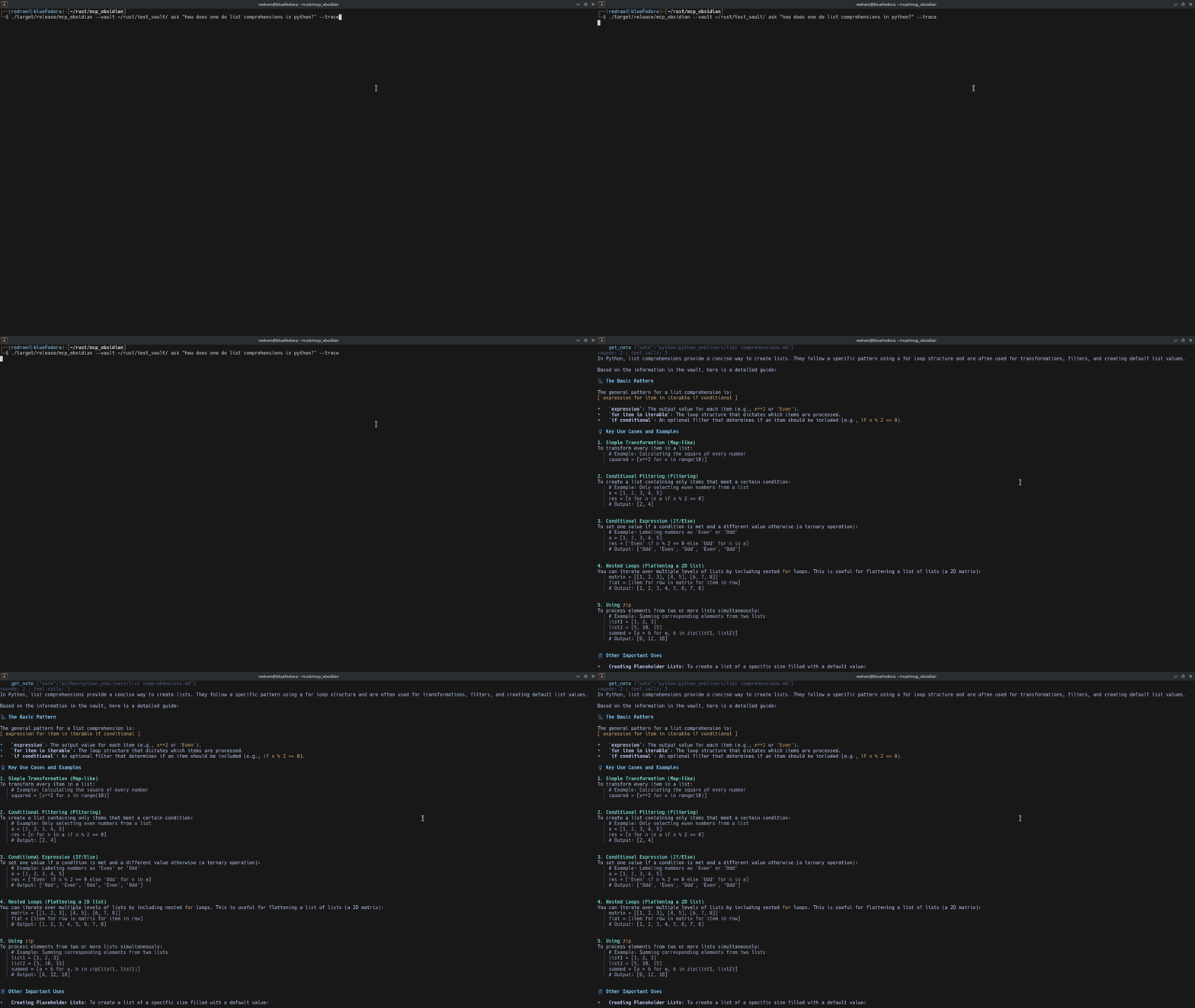
ask — one prompt, answered from the vault
chat — the same loop, interactive
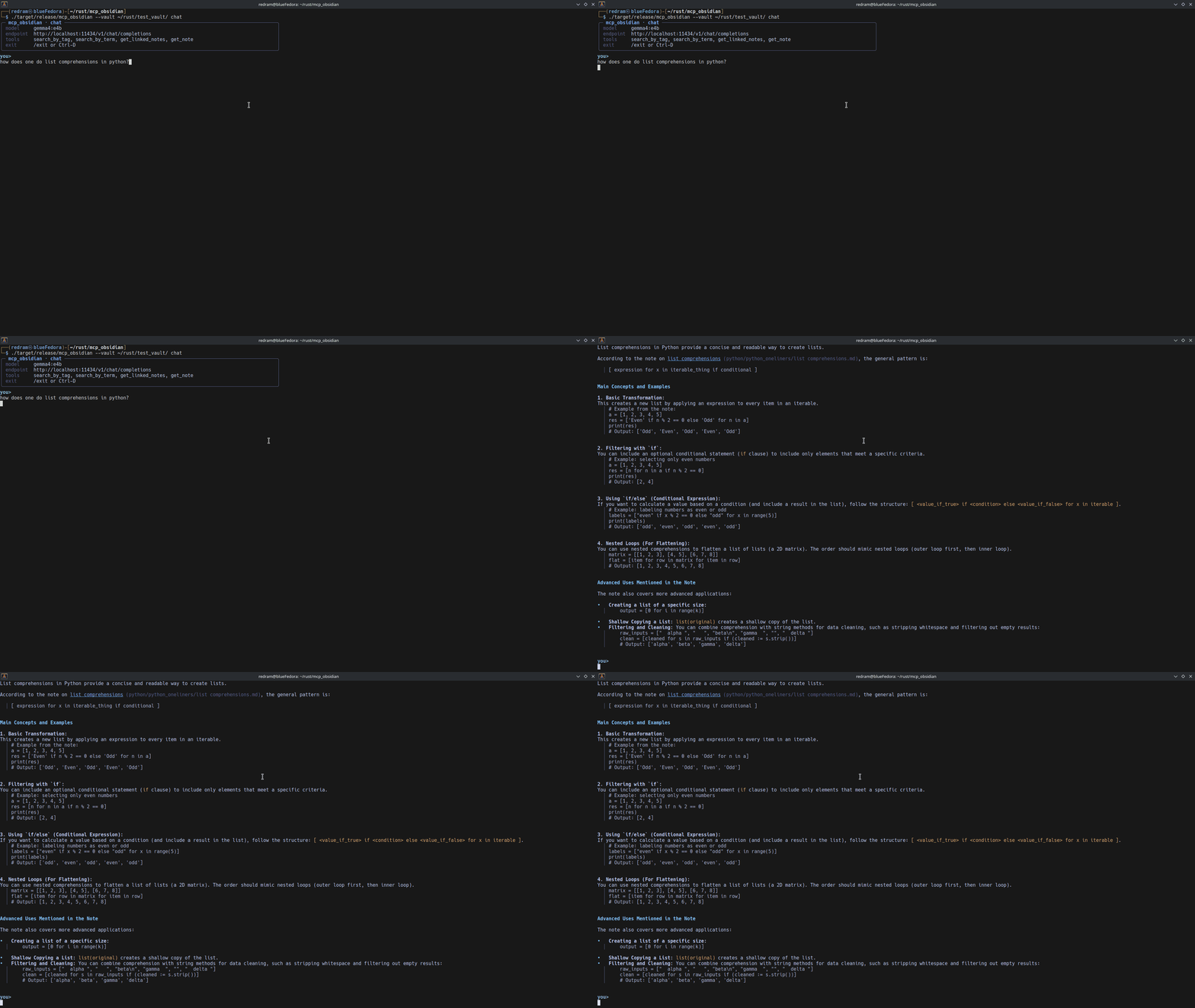
| Preview | What it shows |
|---|---|
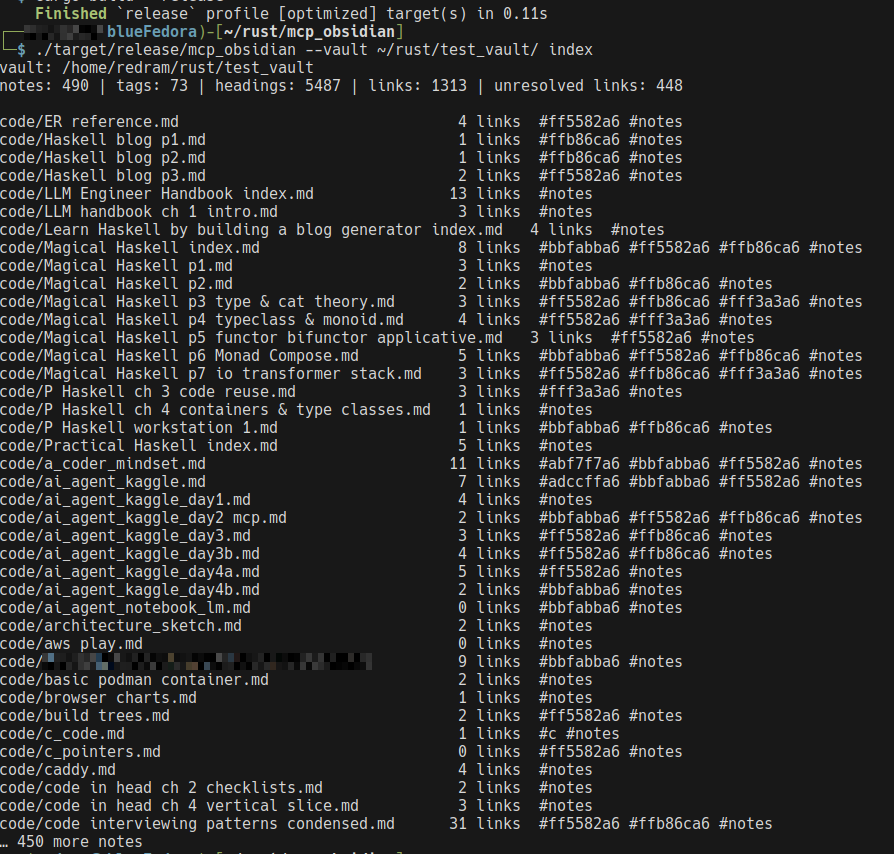 | index: every note with its link count and tags, rendered as a table. |
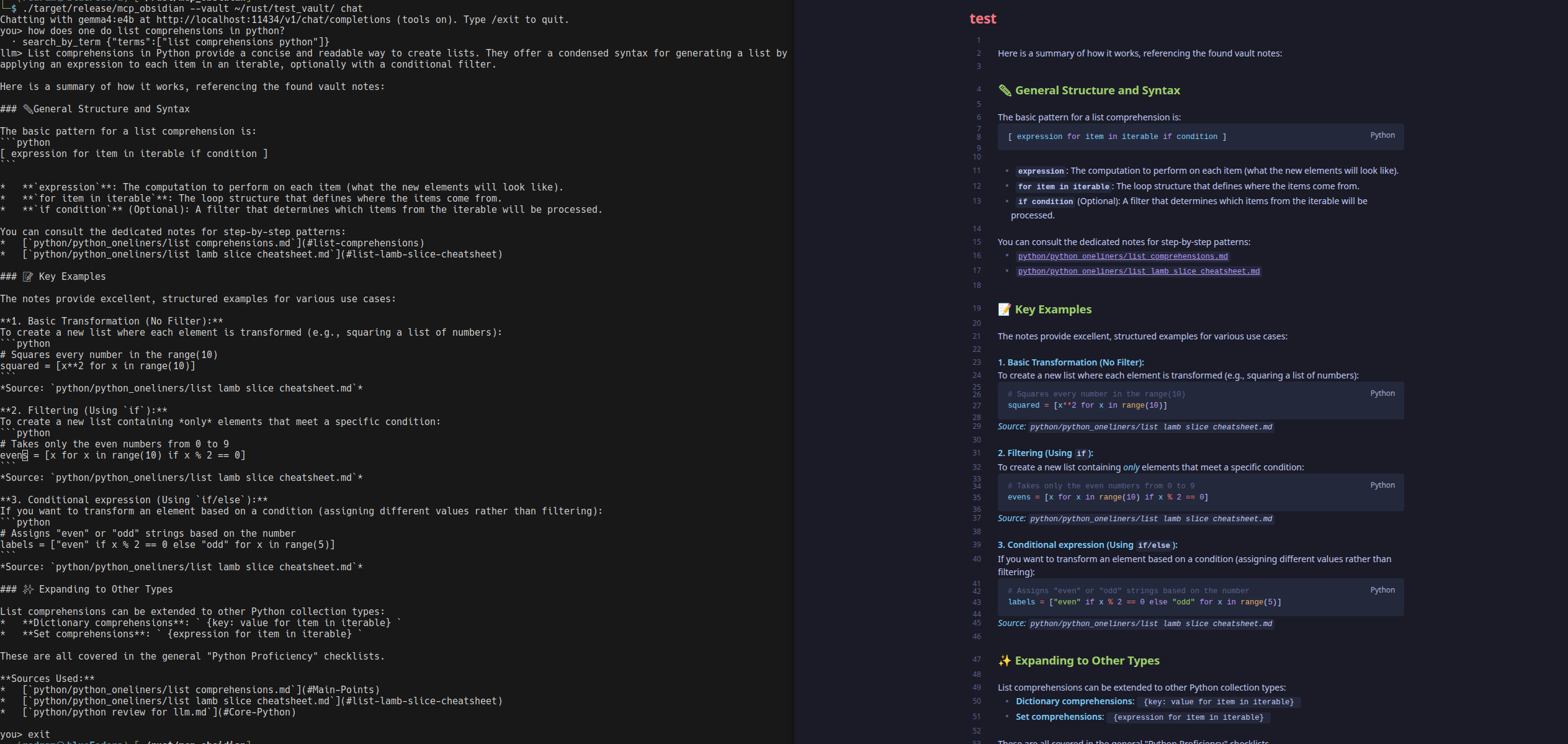 | chat: the welcome panel, the tool trace and a markdown-rendered answer. |
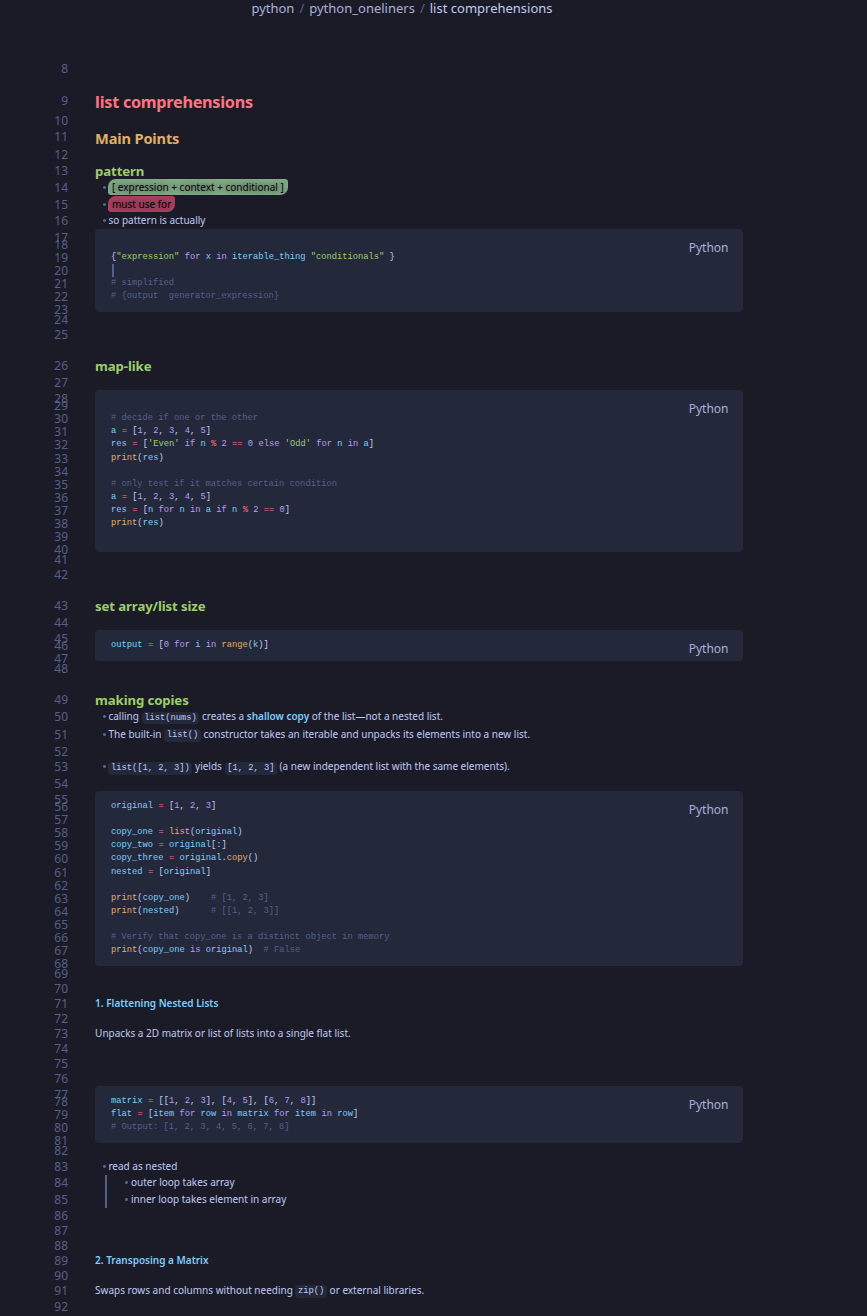 | The vault material behind the Phase 3 exit criterion, python/python_oneliners/list comprehensions.md. |
Fast, because this is a CLI and not a full-fledged TUI
mcp-obsidian prints, it does not paint. There is no alternate screen, no
event loop and no per-frame redraw: colours and layout are computed once per
answer with richrs, written to stdout, and the process exits. Measured on the
machine above:
| step | measured |
|---|---|
| index a 490-note vault (once, at startup) | ~60 ms |
vault query (search, index, MCP tool call) | ~60 ms, no model involved |
full ask round trip (pre-search + tool rounds + answer) | seconds — the local model is the only slow part |
A full-fledged TUI pays for a layout pass and a terminal repaint on every frame,
and a streaming chat UI adds one per token on top. Here the terminal does one
write per answer and the entire budget goes to the model, so retrieval feels
instant and the answer lands as soon as the GPU is done. It also keeps the output
an ordinary Unix stream: ask "…" > answer.md, | grep, NO_COLOR=1 and
FORCE_COLOR=1 all behave the way you expect.
References
Status
Phase 1 complete (2026-09-28): the CLI can talk to Ollama and the tool set is served over MCP.
Phase 2 complete (2026-10-01): the retrieval and Ollama layers are split into
small modules (src/vault/, src/ollama_client/) behind a library target, with
32 tests pinning the behaviour.
Phase 3 complete (2026-10-09): ask is grounded in the vault — an imperative
tool protocol plus a deterministic pre-search, so a model that never calls a
tool still gets the relevant notes. Output is rendered with richrs in a Tokyo
Night theme for ask, chat, doctor, index, search and serve (colours
auto-off when piping).
Phase 4 in progress (2026-10-09): published to crates.io as mcp-obsidian
v0.1.0 (cargo install mcp-obsidian). The binary is dual-licensed and carries
registry metadata; server.json validates against the Official MCP
Registry; scripts/build_mcpb.sh produces a schema-valid MCPB bundle for
Smithery; and serve --http adds a Streamable-HTTP transport for remote hosts.
See DEPLOYMENT.md for hosting it behind a public HTTPS URL and
listing it on Smithery and the ChatGPT directory, and
logs/2026-10-09_mcp_obsidian_phase4_publishing.md for the detail.
See SUMMARY.md for how it works and why, ARCHITECTURE.md for how to read the
code and where to change it, logs/MCP_notes.md for the implementation
comparison, and TASKS.md for what is done and what is next.
Usage
cargo build --release

# vault-only commands (no model needed)
./target/release/mcp-obsidian --vault ~/vault index
./target/release/mcp-obsidian --vault ~/vault search tag project --match-all
./target/release/mcp-obsidian --vault ~/vault search term "token budget"
./target/release/mcp-obsidian --vault ~/vault search links index --depth 2
./target/release/mcp-obsidian --vault ~/vault search note projects/alpha

# with Ollama (defaults: http://localhost:11434/v1, gemma4:e4b)
./target/release/mcp-obsidian --vault ~/vault doctor
./target/release/mcp-obsidian --vault ~/vault ask "what do my notes say about token budgets?" --trace
./target/release/mcp-obsidian --vault ~/vault ask "…" --no-prefetch   # no pre-search, tools only
./target/release/mcp-obsidian --vault ~/vault chat

# as an MCP server for a desktop host
./target/release/mcp-obsidian --vault ~/vault serve
./target/release/mcp-obsidian --vault ~/vault serve -vv   # log each tool call to stderr

# as an MCP server over Streamable HTTP (for a host that cannot spawn a process)
./target/release/mcp-obsidian --vault ~/vault serve --http            # 127.0.0.1:8000/mcp
./target/release/mcp-obsidian --vault ~/vault serve --http 0.0.0.0:8000
./target/release/mcp-obsidian --vault ~/vault serve --http 0.0.0.0:8000 \
  --allow-host vault.example.com                                      # accept that Host header
serve speaks stdio by default so stdout stays the JSON-RPC channel; --http
switches to Streamable HTTP on /mcp instead. HTTP mode has no
authentication — it binds loopback by default and rmcp rejects non-loopback
Host headers, so put a reverse proxy in front of it before exposing it
publicly. See PUBLISHING.md for what the ChatGPT/plugin directory additionally
requires.
A ready-to-edit host configuration is in claude_desktop_config.example.json.
Environment variables OBSIDIAN_VAULT, OLLAMA_URL, OLLAMA_MODEL and
RUST_LOG override the defaults; --api native switches from
/v1/chat/completions to /api/chat. Colour is emitted only to a terminal:
NO_COLOR=1 disables it, FORCE_COLOR=1 forces it when piping.
Answers are word-wrapped to the terminal width, with continuation lines aligned
under the text instead of under the bullet. Redirected output is deliberately
not wrapped, so ask "…" > answer.md keeps the model's own line structure.
A sample vault lives in samples/vault/ for trying the commands above.
Tests
cargo test                            # vault + ollama client; no model needed
cargo test -- --ignored live_client   # needs a running Ollama with the model pulled
License
Licensed under either of Apache License, Version 2.0 or MIT license at your option.
Unless you explicitly state otherwise, any contribution intentionally submitted for inclusion in this crate by you, as defined in the Apache-2.0 license, shall be dual licensed as above, without any additional terms or conditions.