Listed from the MCP registry; nobody on Odel publishes it.

Email SMTP IMAP
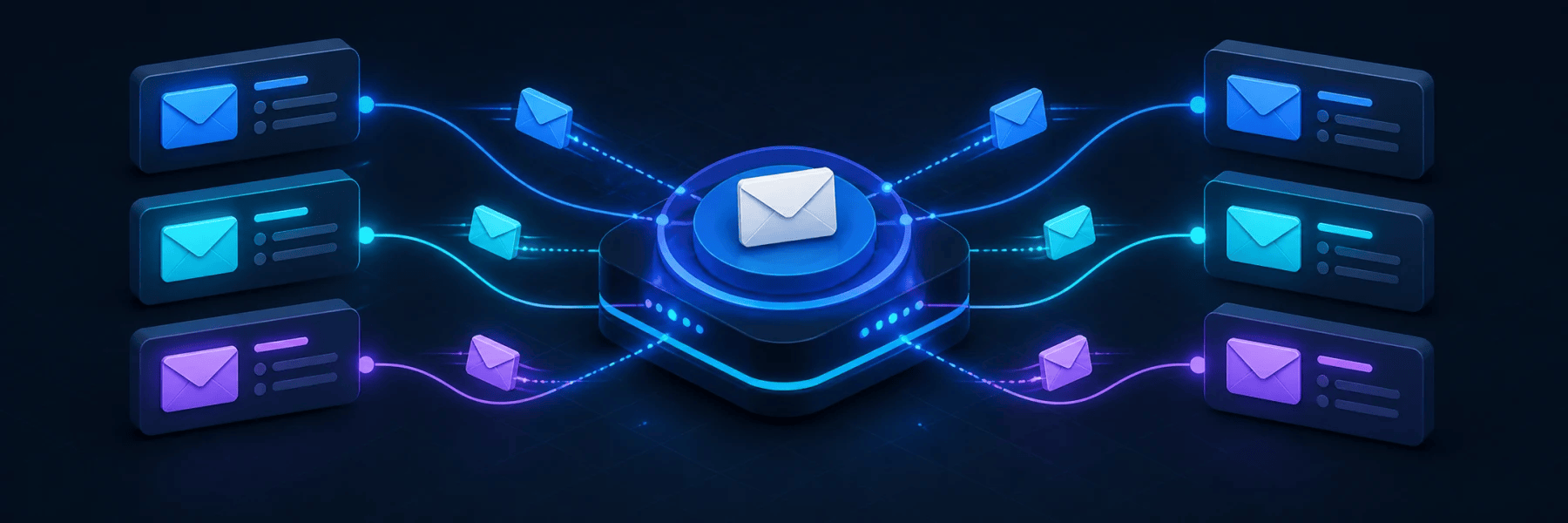
Multi-account SMTP/IMAP email tools: search, read, send, reply, forward, flags and folders.
Runs on your machine from its package; the steps are below.
What it does
- Reads
- Writes
- High impact
Not assessed yet.
What it costs
FreeOdel charges nothing per call. The publisher may charge for its own service.
Runs locally over stdio
This server isn't hosted — your MCP client launches it from a package registry. Use one of the commands below, or drop the config into your client (e.g. Claude Desktop).
Run
npx -y email-smtp-imap-mcp
MCP client config
{
  "mcpServers": {
    "email-smtp-imap": {
      "command": "npx",
      "args": [
        "-y",
        "email-smtp-imap-mcp"
      ]
    }
  }
}
Email SMTP/IMAP MCP
One local MCP server for every inbox: search, read, send, reply, forward, and organize email across multiple accounts.







Why this server
For third-party notices, licence enquiries and the version 2.2.2 supplement, see the open source licence compliance programme.
- No account-count cap — add work, personal, support, or client inboxes and switch with
account_name. - SMTP + IMAP together — send and receive through one small MCP server.
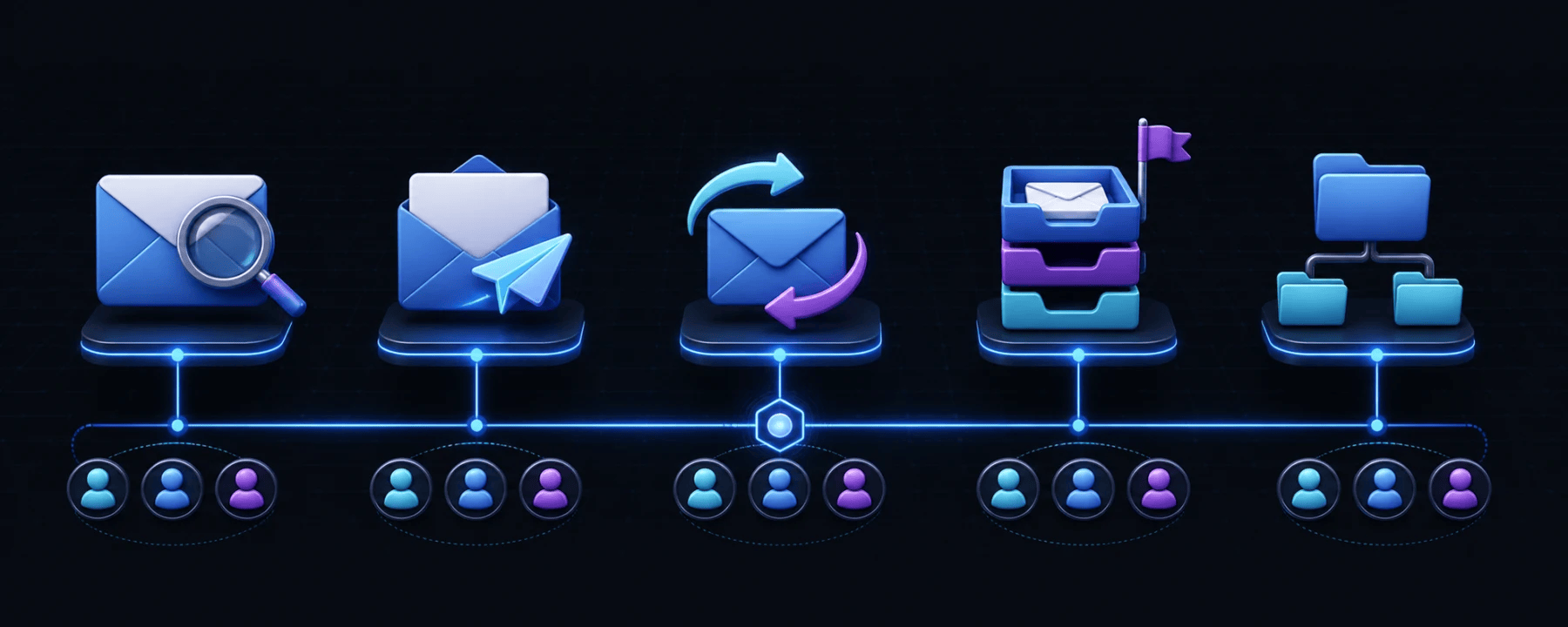
- Complete everyday workflow — search, read, reply, forward, attach files, flag, archive, move, and list folders.
- Provider-agnostic — works with Gmail, iCloud Mail, Fastmail, Outlook, self-hosted mail, and other standard SMTP/IMAP providers.
- Local stdio transport — no hosted relay and no separate control panel.
Quick start
1. Create your .env
Copy .env.example to a private location and add as many named accounts as you need:
EMAIL_ACCOUNTS_JSON='{
  "work": {
    "smtp": {
      "host": "smtp.gmail.com",
      "port": 587,
      "secure": false,
      "user": "work@example.com",
      "password": "app-password"
    },
    "imap": {
      "host": "imap.gmail.com",
      "port": 993,
      "secure": true,
      "user": "work@example.com",
      "password": "app-password"
    },
    "default_from_name": "Your Name",
    "sender_emails": ["work@example.com", "alias@example.com"]
  },
  "personal": {
    "smtp": {
      "host": "smtp.mail.me.com",
      "port": 587,
      "secure": false,
      "user": "you@icloud.com",
      "password": "app-password"
    },
    "imap": {
      "host": "imap.mail.me.com",
      "port": 993,
      "secure": true,
      "user": "you@icloud.com",
      "password": "app-password"
    }
  }
}'

DEFAULT_EMAIL_ACCOUNT="work"
The server loads .env from its working directory automatically. EMAIL_ENV_FILE lets an MCP client use an .env stored anywhere.
2. Add the MCP server
For Claude Desktop, edit:
- macOS:
~/Library/Application Support/Claude/claude_desktop_config.json - Windows:
%APPDATA%\Claude\claude_desktop_config.json
{
  "mcpServers": {
    "email": {
      "command": "npx",
      "args": ["-y", "email-smtp-imap-mcp"],
      "env": {
        "EMAIL_ENV_FILE": "/absolute/path/to/your/.env"
      }
    }
  }
}
Use an absolute path, restart your MCP client, then ask: “List my configured email accounts.”
Pass account JSON directly from the MCP client
You can skip the .env file and set EMAIL_ACCOUNTS_JSON plus DEFAULT_EMAIL_ACCOUNT directly in the MCP client’s env object. The JSON must be escaped into a single string.
{
  "env": {
    "EMAIL_ACCOUNTS_JSON": "{\"work\":{\"smtp\":{\"host\":\"smtp.gmail.com\",\"port\":587,\"user\":\"work@example.com\",\"password\":\"app-password\"},\"imap\":{\"host\":\"imap.gmail.com\",\"port\":993,\"user\":\"work@example.com\",\"password\":\"app-password\"}}}",
    "DEFAULT_EMAIL_ACCOUNT": "work"
  }
}
Single-account `.env` variables
Use SMTP_HOST, SMTP_PORT, SMTP_SECURE, SMTP_USER, SMTP_PASS, IMAP_HOST, IMAP_PORT, IMAP_SECURE, IMAP_USER, and IMAP_PASS instead of EMAIL_ACCOUNTS_JSON.
SMTP_USERNAME/SMTP_PASSWORD and IMAP_USERNAME/IMAP_PASSWORD are accepted aliases. IMAP credentials default to the SMTP credentials when omitted. Use SENDER_EMAILS as a comma-separated allowlist for optional from_email selection.
Tools
See the tool reference for every input, default, response field and error format.
| Tool | What it does |
|---|---|
accounts_list | List every configured account and identify the default without exposing credentials. |
emails_find | Search by text, sender, recipient, subject, date, read state, flag state, or attachments. Optionally return bodies and attachments. |
email_send | Send plain-text or HTML email with CC, BCC, sender aliases, and base64 attachments. |
email_respond | Reply, reply-all, or forward by email UID with threading and optional original attachments. |
emails_modify | Mark read/unread, flag/unflag, or move messages to another folder. |
folders_list | List folders with optional total and unread counts. |
All tools except accounts_list accept an optional account_name. Without it, the server uses DEFAULT_EMAIL_ACCOUNT or the first configured account. There is no application-level account-count limit.
Verify your setup
After restarting the MCP client, try these in order:
- “List my configured email accounts.”
- “List folders for my
workaccount.” - “Find the five newest unread emails in my
personalaccount.” - “Send a plain-text email from my
workaccount.”
Provider settings
| Provider | SMTP | IMAP | Credential |
|---|---|---|---|
| Gmail | smtp.gmail.com:587 | imap.gmail.com:993 | App password |
| iCloud Mail | smtp.mail.me.com:587 | imap.mail.me.com:993 | App-specific password |
| Other providers | Use the provider's SMTP host | Use the provider's IMAP host | Provider password or app password |
Use secure: true for implicit TLS ports such as 465/993. Port 587 normally uses secure: false and upgrades with STARTTLS. Both SMTP and IMAP require TLS 1.2 or newer and a valid server certificate. With secure: false, STARTTLS is mandatory before authentication; servers without STARTTLS are rejected. Plaintext-only relays are not supported.
Development
git clone https://github.com/samihalawa/email-smtp-imap-mcp.git
cd email-smtp-imap-mcp
npm ci
npm test
Run the compiled stdio server with npm start. Build a production container with docker build -t email-smtp-imap-mcp ..
Contributing
Issues and focused pull requests are welcome. See CONTRIBUTING.md for the development workflow and SECURITY.md for vulnerability reports.
License
MIT © Sami Halawa
Security and release assurance
Report vulnerabilities through the private route in SECURITY.md. The security assurance programme and source-bound review describe the controls, evidence and publication boundaries for this project. They do not claim an external ISO certificate or completed OpenChain conformance.
Maintainers can run npm run assurance to build the package, run security checks, archive pinned component inputs and verify an offline recovery. The generated release assets include platform-specific build inputs and are intended for durable release retention.