
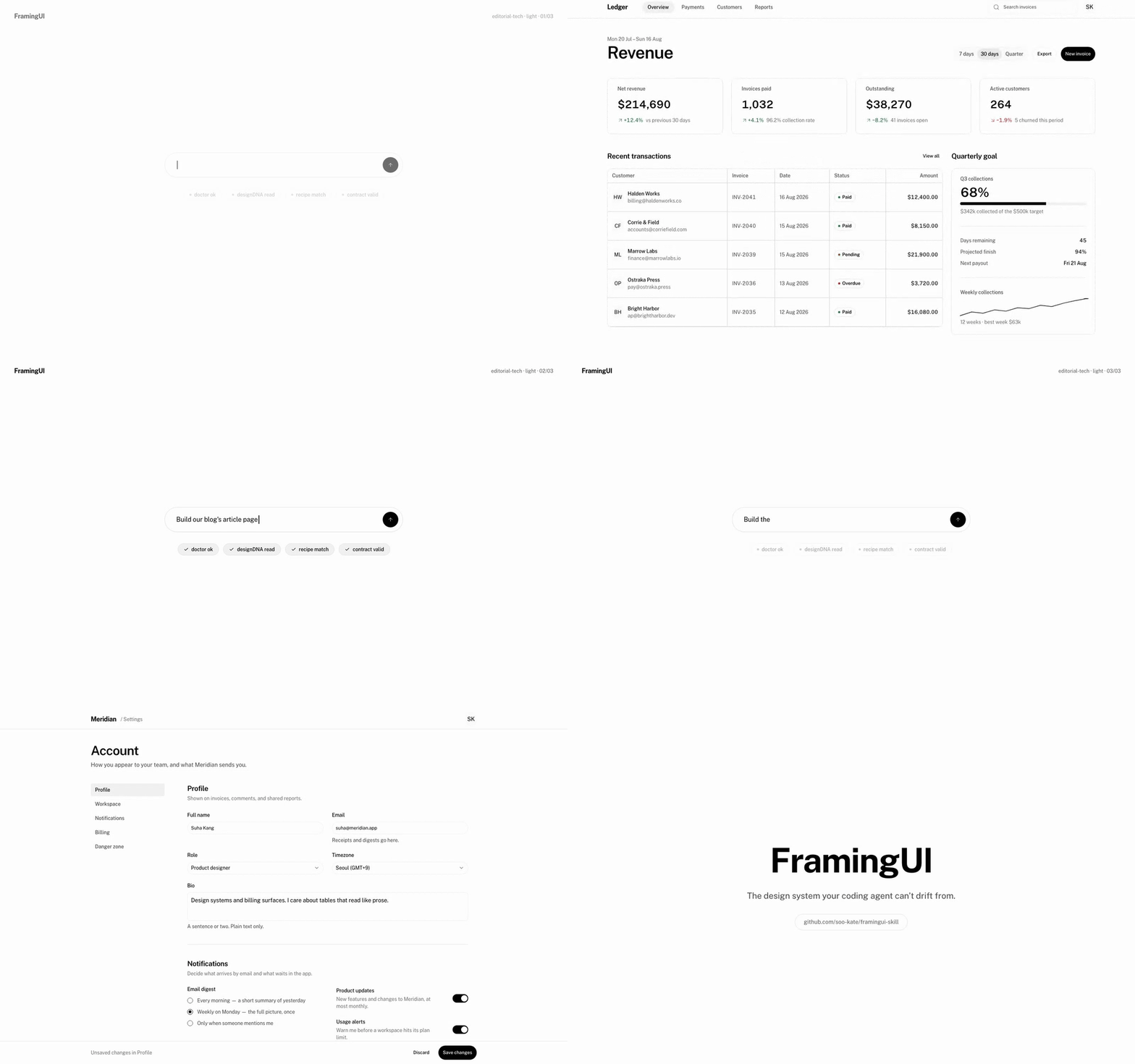
FramingUI
The design system your coding agent can't drift from.
Install · Demos · How it works · Free scope · framingui.com
Ask an agent to "build a settings page" and you get whatever the model dreamt that day: default-blue buttons, three border radii on one screen, a hand-rolled dropdown with no focus states. The code runs. The screen is slop.
FramingUI is an agent skill: a token-driven design system packaged so that coding agents (Claude Code, Codex) compose screens from it instead of around it. A closed vocabulary — components, layout tokens, machine-checkable screen recipes, one strongly-opinionated theme — plus zero-install validators that fail loudly when the agent strays. Your agent reads the theme's design DNA, composes from the catalog, validates the result, and self-critiques the rendered screen before calling it done.
No server. No account. No telemetry. A folder of data and plain-node scripts.
What an agent ships with it
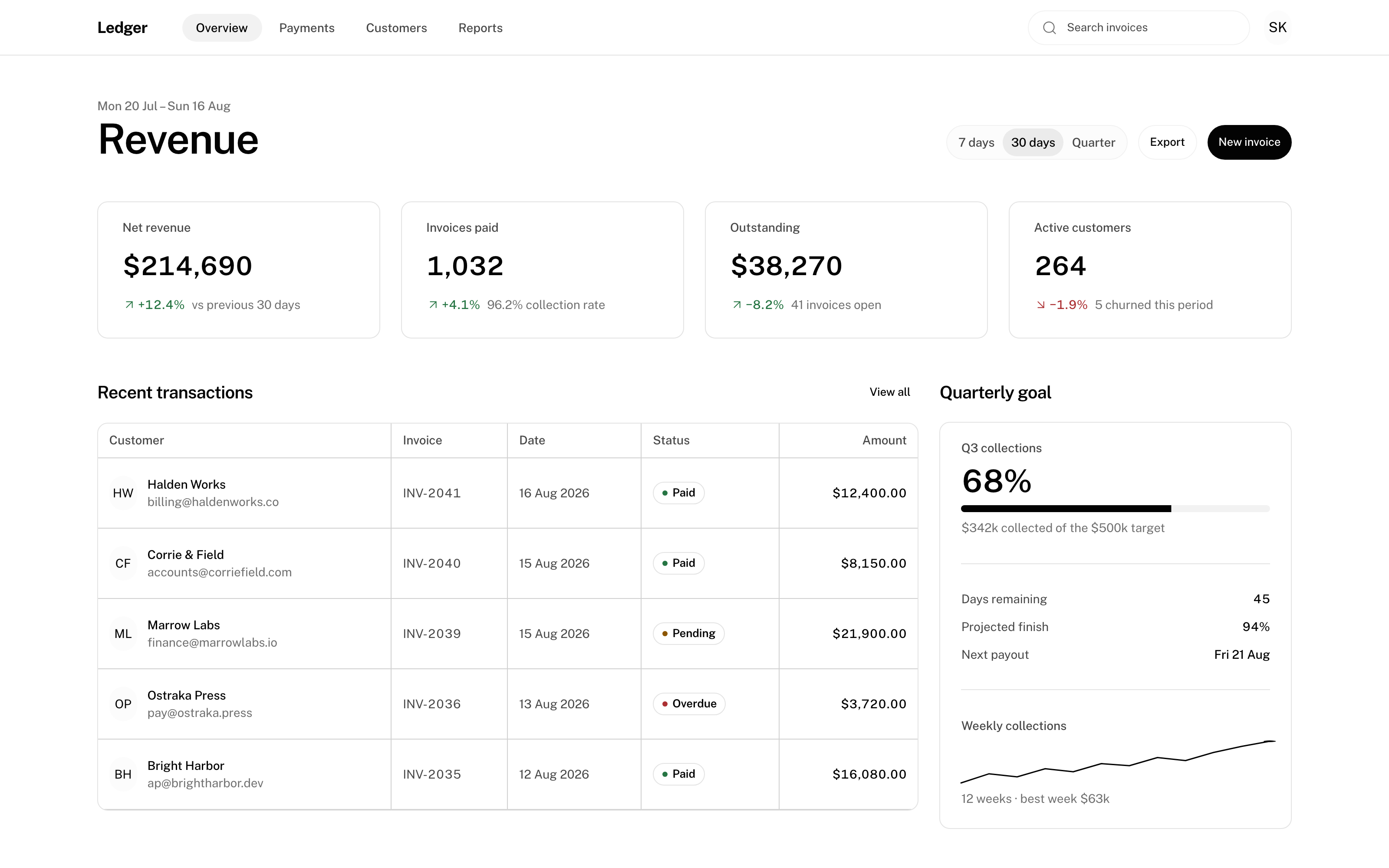
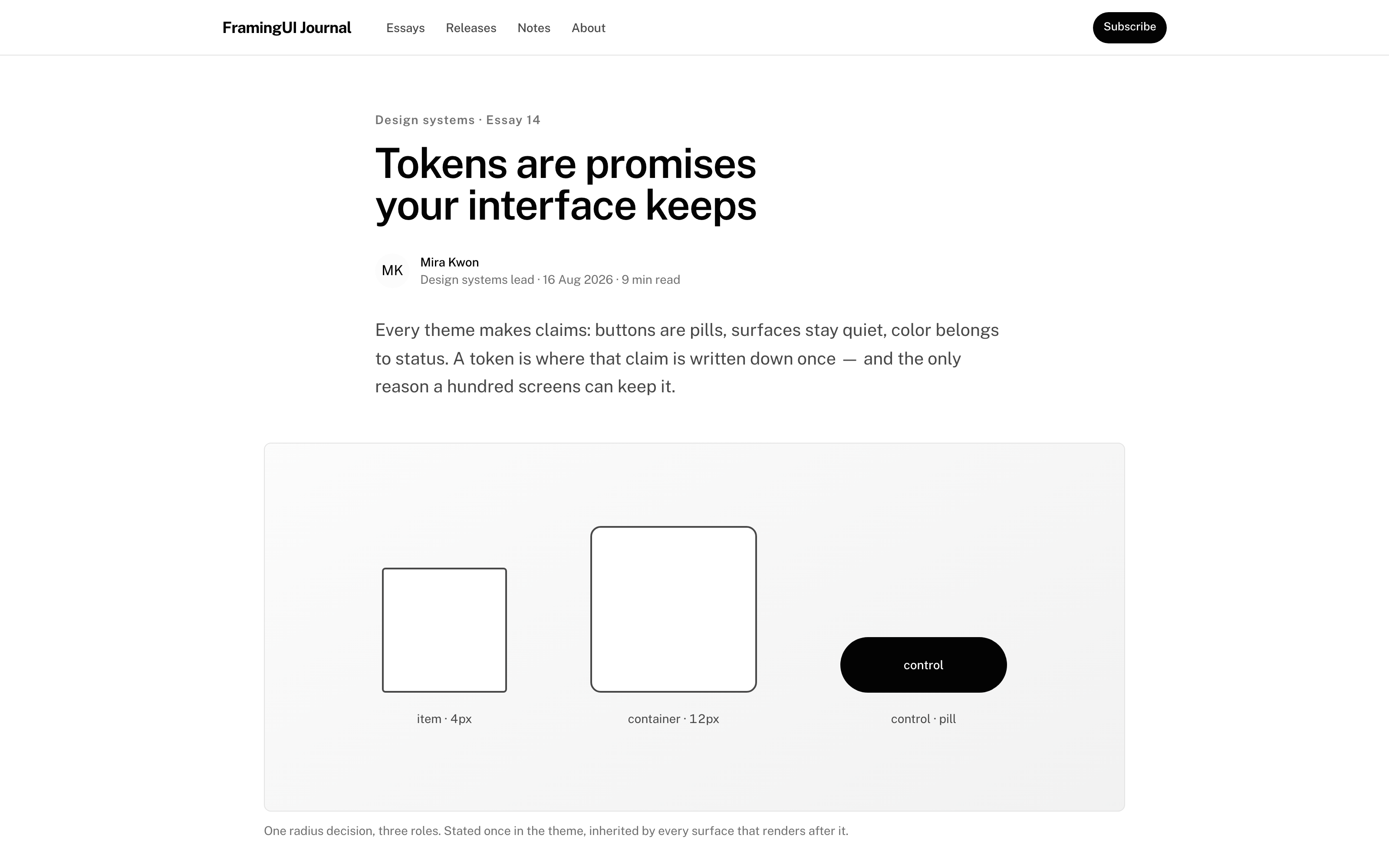
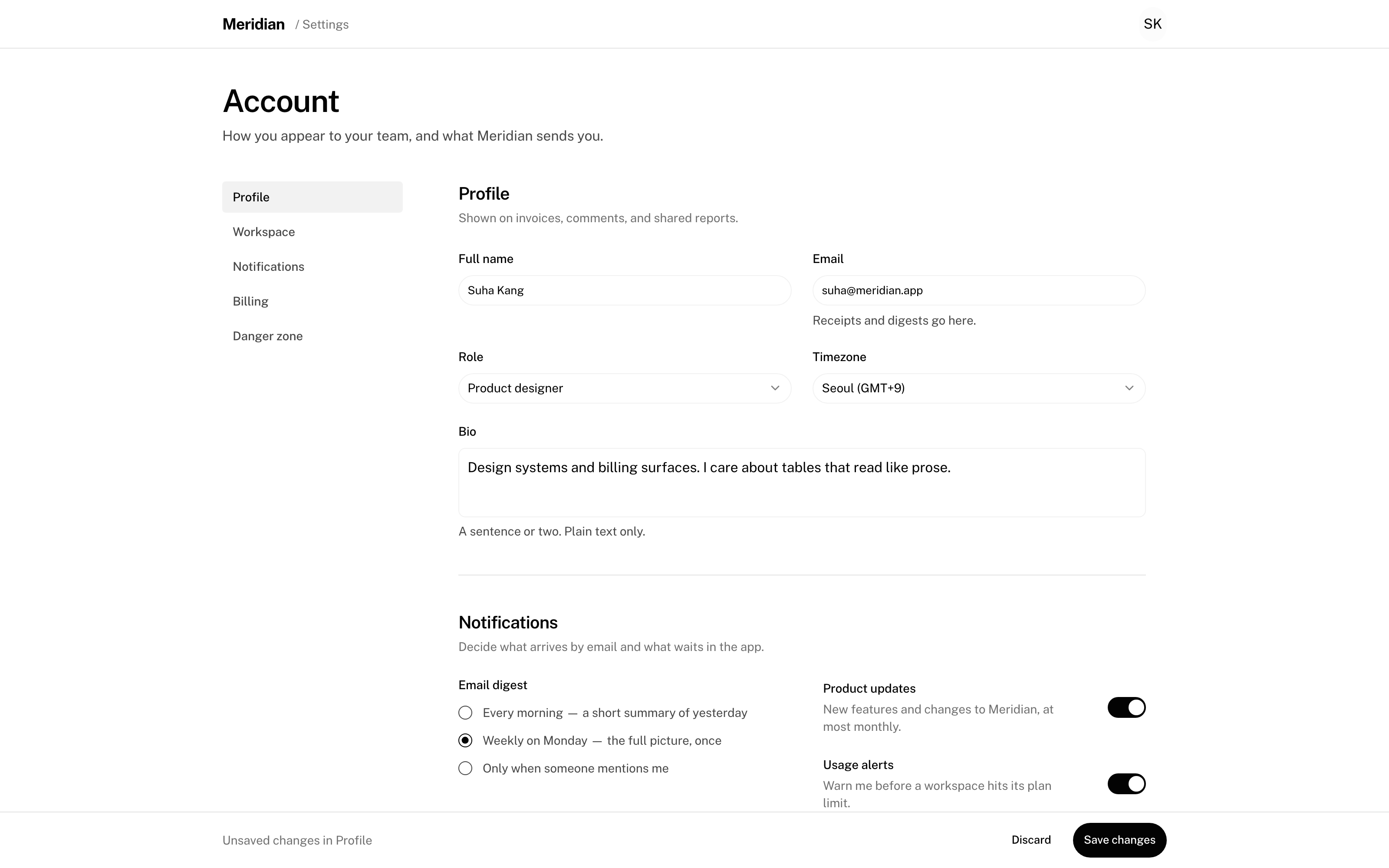
One prompt each, zero design feedback rounds — composed entirely from the free catalog in the editorial-tech theme:
| "Build a revenue dashboard" | "Build our blog's article page" |
|---|---|
 |  |
| "Build the account settings page" | Licensed preview: the conversation pack |
|---|---|
 | 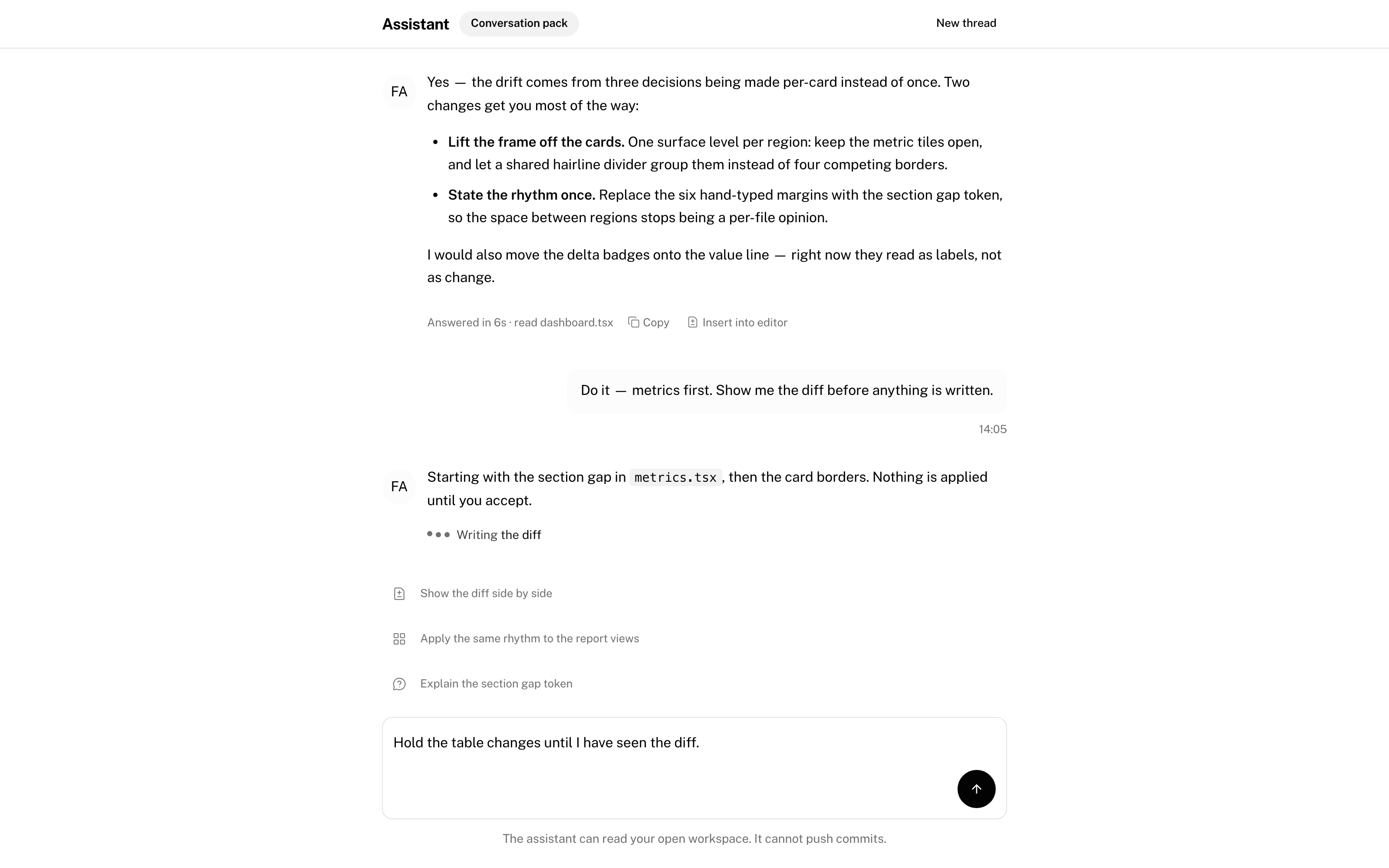 |
The fourth screen uses the licensed conversation domain pack — thread states, streaming, composer. It's shown here so you know where the free line sits.
Install (30 seconds)
Claude Code — from your project root:
mkdir -p .claude/skills
curl -L https://framingui.com/get/skill | tar -xz -C .claude/skills
OpenAI Codex — same tarball into .agents/skills instead.
Or clone this repo and copy skill/framingui into your skills directory. Claude Code and Codex auto-discover it; from then on, any "build a screen / add a component / apply the theme" request routes through the system.
To actually render what the agent composes, add the component library to your project:
npm install https://framingui.com/get/ui
Then wire the scope + theme CSS — the skill's own INSTALL.md walks your agent (or you) through it, and node .claude/skills/framingui/scripts/doctor.mjs . verifies the wiring and tells you exactly what's missing.
Prefer MCP? The same validators and catalog are exposed as an MCP server — @framingui/mcp (npx @framingui/mcp, stdio) — for clients that speak MCP but don't load skills.
How it works
doctor.mjschecks the environment once per project — packages, theFramingUIScopeboundary, theme CSS actually loaded. Broken wiring is a hard fail, not a silent default palette.- The agent reads the theme (
assets/themes/editorial-tech.json) — its design DNA, mood keywords, and per-recipe notes are hard constraints, not suggestions. - It composes from the closed vocabulary: 30 components, 12 shells / 8 pages / 17 section patterns, 9 screen recipes with required regions and states. Inventing a token is a validation error.
validate-screen.mjs/layout.mjscheck the result mechanically — exit codes, not vibes. Recipes make "a settings screen must have these regions and states" machine-checkable.- The agent renders, screenshots, and self-critiques against the design DNA before declaring done.
The commands your agent will use (all plain node, zero install):
node .claude/skills/framingui/scripts/doctor.mjs .            # environment check
node .claude/skills/framingui/scripts/validate-screen.mjs s.json   # screen definition gate
node .claude/skills/framingui/scripts/layout.mjs validate c.json   # layout contract gate
node .claude/skills/framingui/scripts/recipe.mjs list         # screen grammars
node .claude/skills/framingui/scripts/pack.mjs list           # domain packs
What's free (and what's licensed)
The free tier is deliberately minimal, lovable, and stable: it only ever grows, so a screen you ship today keeps validating forever.
| Free | Licensed | |
|---|---|---|
| Components | 30 — the full 20-component screen contract + form/feedback/layout essentials | 62 — adds Sidebar, Command, Combobox, DataTable, DatePicker, Sheet, Popover, the 8-component conversation suite, and more |
| Themes | editorial-tech | 9 voices |
| Layout tokens & recipes | All of them | All of them |
| Domain packs | — | conversation (assistant surfaces) |
| Updates | Stable free channel | Continuous releases |
When your agent reaches for something licensed, it doesn't get a mystery "unknown component" — it gets a LICENSE_REQUIRED error naming the real thing and where it lives, with strict instructions not to hand-roll an imitation. The full catalog is subscription-licensed at framingui.com — join the waitlist and you'll get exactly one email at launch.
FAQ
Why a skill and not just docs? Agents don't read docs; they pattern-match. A skill puts the vocabulary, the constraints, and the validators in the agent's working set — and the validators make violations cost an exit code.
Does this phone home? No. Everything is local. The optional journal (.framingui/journal/) never leaves your machine and records rule IDs and exit codes, never your code.
Can I use it commercially? Yes — this bundle is MIT. The licensed catalog is a separate commercial product.
License
MIT for everything in this repository. skill/framingui is generated from the FramingUI source system — issues and screenshots of misbehaving screens are very welcome.