Listed from the MCP registry; nobody on Odel publishes it.

Scenet
Write, check and render comic panels as SVG: a deterministic compiler, no image model.
Runs on your machine from its package; the steps are below.
What it does
- Reads
- Writes
- High impact
At most: creates or changes data: records, files, settings.
What it costs
FreeOdel charges nothing per call. The publisher may charge for its own service.
Runs locally over stdio
This server isn't hosted — your MCP client launches it from a package registry. Use one of the commands below, or drop the config into your client (e.g. Claude Desktop).
Run
uvx scenet
MCP client config
{
  "mcpServers": {
    "scenet": {
      "command": "uvx",
      "args": [
        "scenet"
      ]
    }
  }
}Write what is in a comic panel. Scenet works out where everything goes, and draws it.




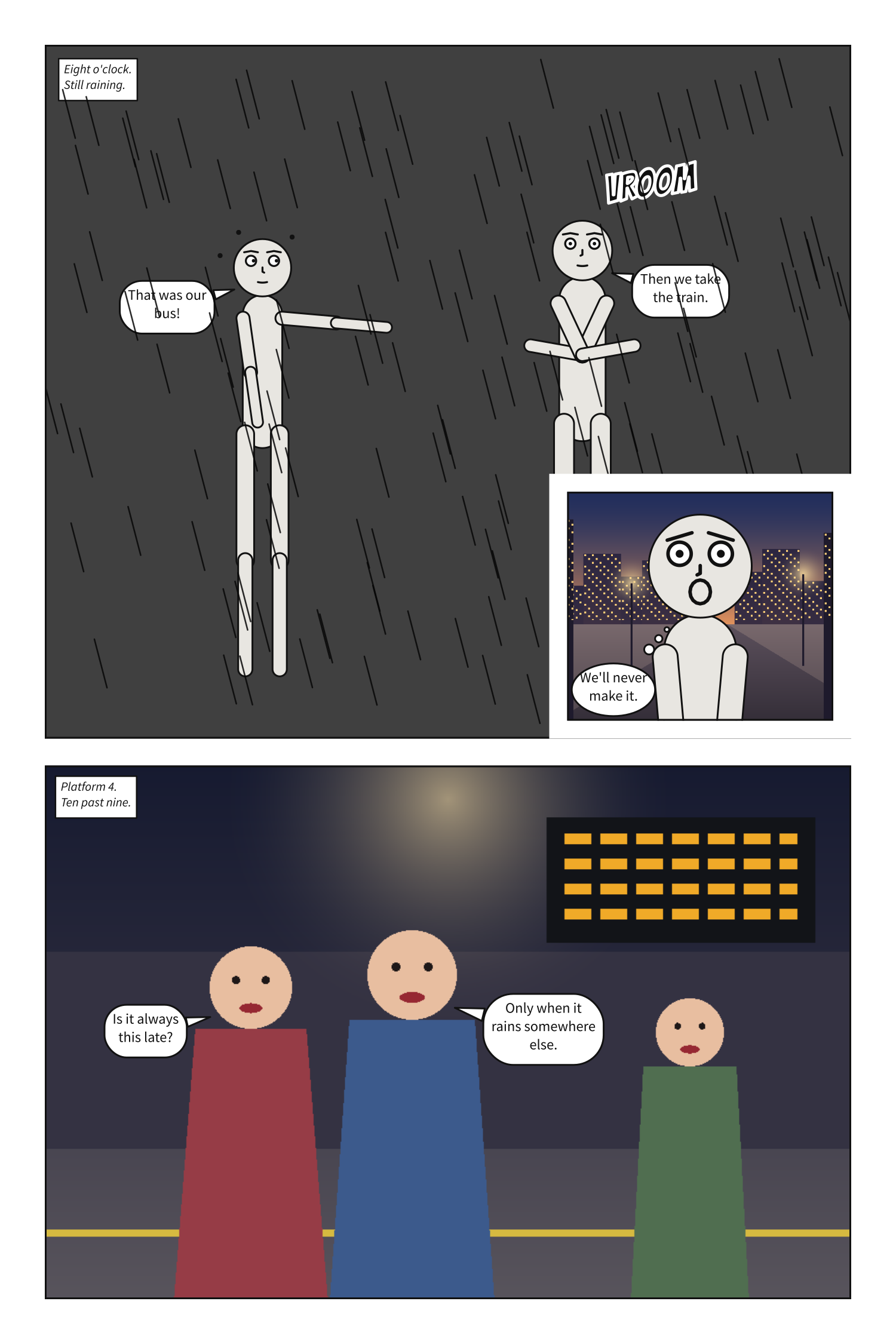
The gallery's tour,
exactly as scenet build draws it from one YAML file.
Open it in the playground.
Scenet compiles a written description of a comic, whether a panel, a sequence, a page or a whole comic script, into SVG and into a PDF for print: it frames each shot, stages the cast, sizes, places and tails every balloon in reading order, letters over your own art, reads right to left, writes pictures a screen reader can read, and exports each panel for image models, all without an image model of its own.
Try the playground · See the gallery · Install
This project is deliberately AI-generated. This project is, by design, almost entirely generated by AI. It exists as a personal training ground for learning to work with AI coding tools. The architecture, code, tests and documentation are overwhelmingly AI-authored, under human direction and review. Treat it accordingly: an experiment first, a usable tool second.
See it work
You write what is in the panel, and no coordinates:
panel:
  size: [1000, 800]

camera:
  shot: medium_shot

cast:
  alice: {reference: alice, pose: pointing,     at: left_third}
  bob:   {reference: bob,   pose: arms_crossed, at: right_third, facing: left}

staging:
  - alice left_of bob
  - alice looking_at bob
  - alice ground_shared_with bob

script:
  - say: {by: alice, text: "You forgot your umbrella!", prefer: top_left}
  - say: {by: bob,   text: "I know."}
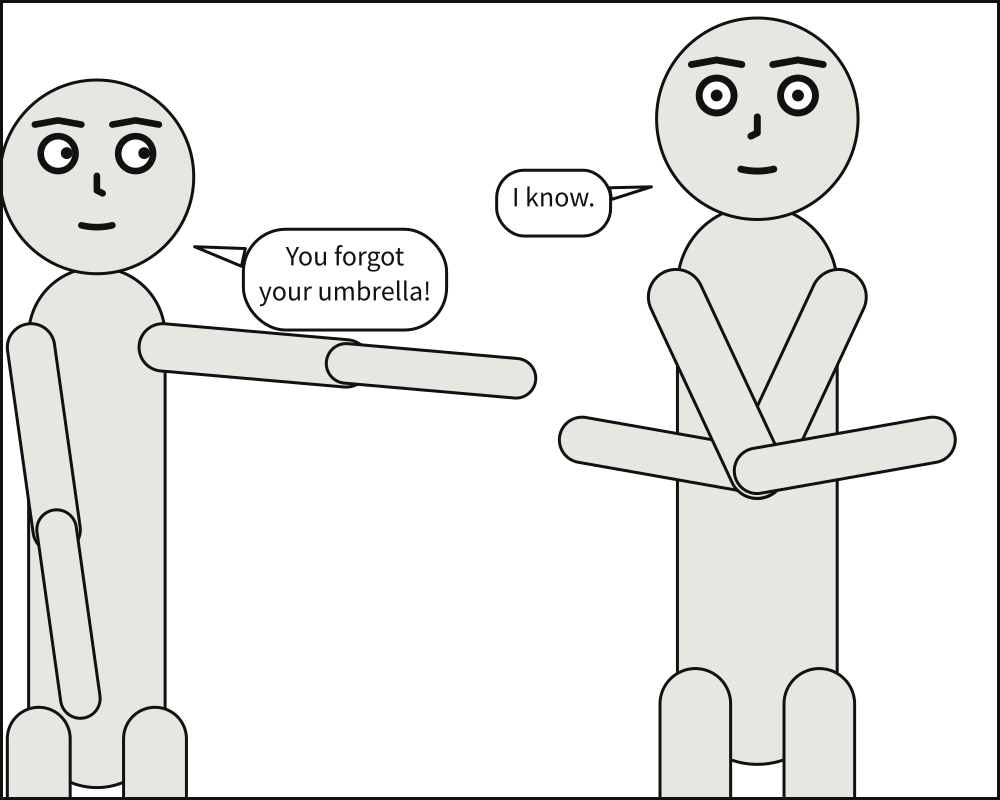
The compiler decides how large each figure is for a medium shot, where they stand and which way they face, how big each balloon must be for its words, where it can sit without covering a face, and how its tail reaches the speaker's mouth. Open it in the playground, and change it.
Where to start
- Discover: the gallery, every example drawn beside its source, and what Scenet does today.
- Write comics: the author's tour, twelve chapters from a first panel to a printed page, then the language, key by key.
- Build with Python: Learn Scenet from Python, then the Python API.
- Drive from a model: the spec pack, the Agent Skill and
scenet mcp. - Compile documents from someone else: the security model says what is safe, what is not, and what to add.
- Contribute: the contributor's guide and the maintainer's documentation.
Install
pip install scenet
Python 3.12 or newer, with no system libraries and no fonts to install.
pip install 'scenet[mcp]' adds the MCP server; the install guide
has the rest.
Why
Music has a score, which says what is played and leaves the sound to a performer. Scenet is a score for comics: Why Scenet says what that buys, and what changed in each release is on the site.
License
0BSD: use it for anything, with no notice to keep. The language is free to implement. Third-party components are listed in THIRD_PARTY_NOTICES.md.