
peek
Exposes recorded browser sessions (rrweb DOM, console, network) to AI coding agents, fully local
Runs on your machine from its package; the steps are below.
What it does
- Reads
- Writes
- High impact
At most: moves money, runs code or commands, deletes data, or sends messages for you.
What it costs
FreeOdel charges nothing per call. The publisher may charge for its own service.
Runs locally over stdio
This server isn't hosted — your MCP client launches it from a package registry. Use one of the commands below, or drop the config into your client (e.g. Claude Desktop).
Run
npx -y @peekdev/mcp
MCP client config
{
  "mcpServers": {
    "peek": {
      "command": "npx",
      "args": [
        "-y",
        "@peekdev/mcp"
      ]
    }
  }
}

rrweb-stack
Two OSS products on one rrweb-based substrate. Both ship as npm packages today.
| Product | One line | Install |
|---|---|---|
| tracelane | The recorder for your WebdriverIO and Playwright tests — Cypress on the roadmap. Self-contained HTML for every run — replay failures, audit successes, attach to any bug tracker. No SaaS, no dashboard, no signup. | npx @tracelane/cli init |
| peek | Your real browser, exposed to your AI coding agent over MCP — the agent reads recorded sessions and, with your explicit consent, drives the live page. Never leaves your machine. | npm install -g @peekdev/cli && npx peek init |
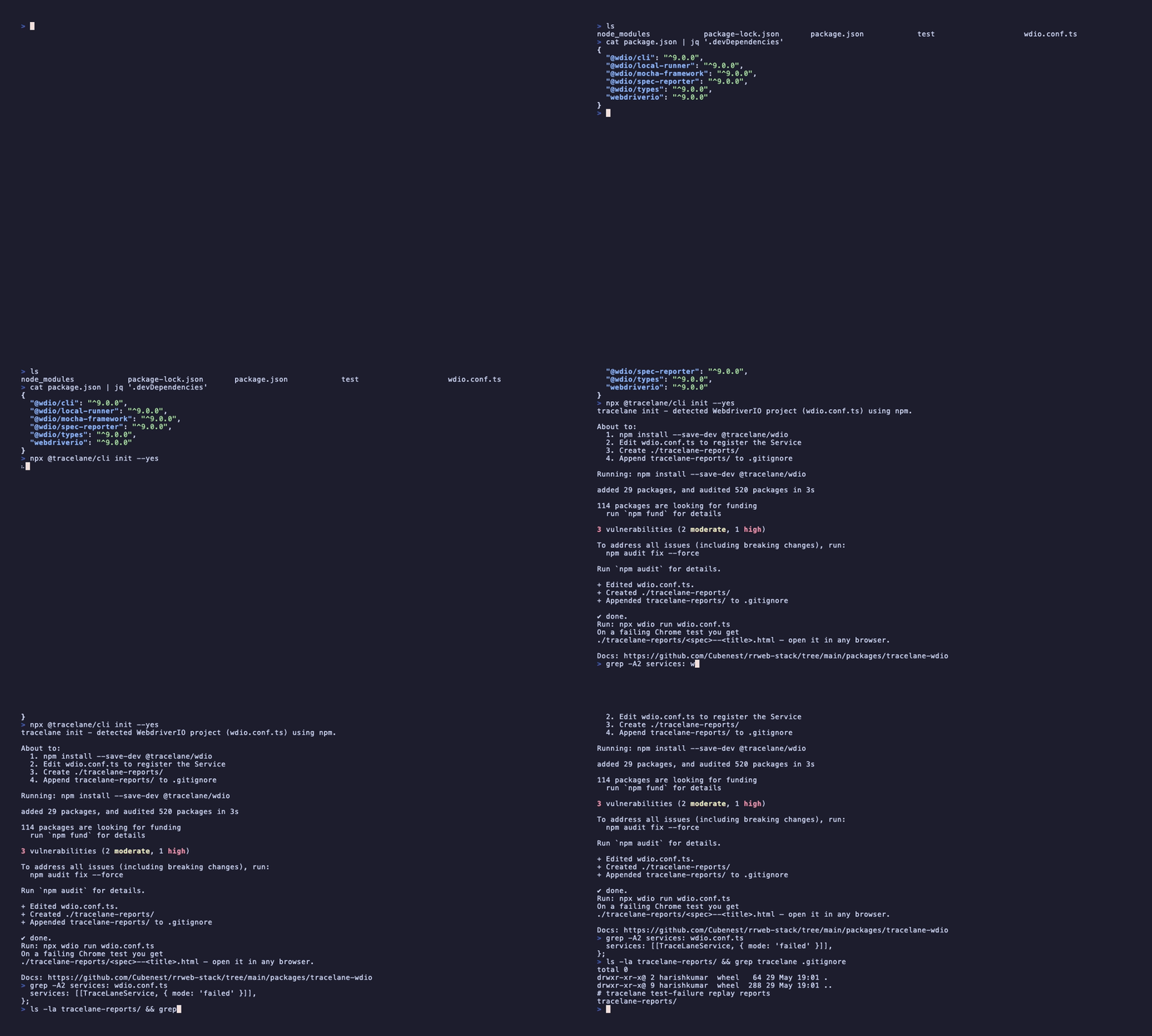
Above: npx @tracelane/cli init in a real WebdriverIO project — detect runner, install, edit wdio.conf.ts, ignore reports dir.
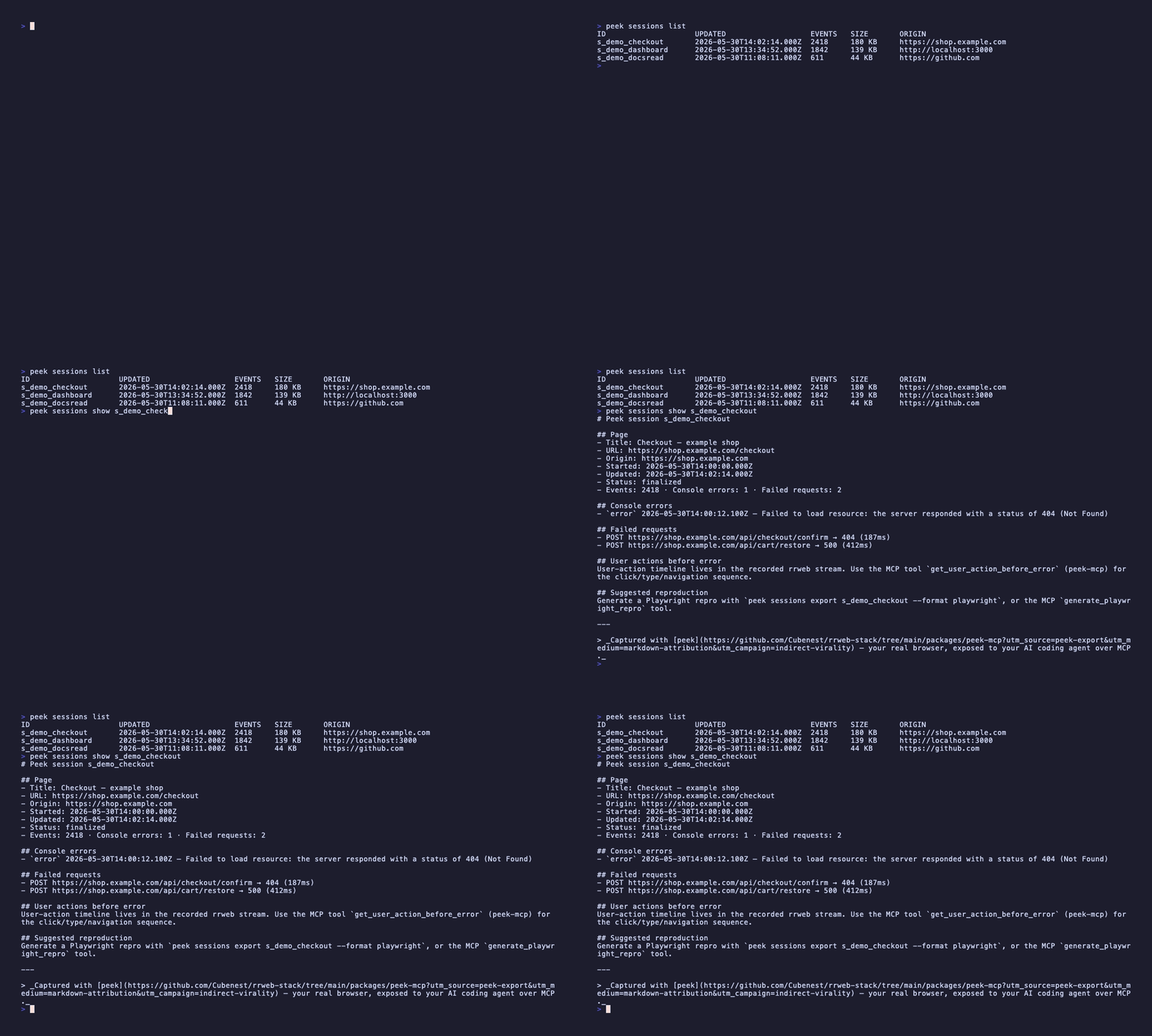
Above: peek sessions list then peek sessions show ... --format markdown — a recorded browser session as queryable structured output, AI-ready.






What's where
tracelane
| Package | Status | What it does |
|---|---|---|
@tracelane/wdio | alpha | WebdriverIO Service — capture + write HTML report |
@tracelane/playwright | alpha | Playwright Reporter + auto-fixture — capture + write HTML report |
@tracelane/cypress | planned | JSON-output adapter (no Test Replay overlap) |
@tracelane/core | alpha | Framework-agnostic capture engine — depended on by the adapters |
@tracelane/report | alpha | Self-contained HTML report builder |
Docs: tracelane.cubenest.in (source under apps/tracelane-docs/). The tracelane-wdio README is the right starting point.
peek
| Package | Status | What it does |
|---|---|---|
@peekdev/cli | alpha | peek init installer + peek sessions query / export |
@peekdev/mcp | alpha | stdio MCP server — exposes captured sessions, plus consent-gated live read + act tools, to Claude Code, Cursor, Cline, Windsurf |
peek-extension | alpha · on the Chrome Web Store | Chrome MV3 extension — the real browser, recorded |
Docs: peek.cubenest.in (source under apps/peek-docs/).
peek requires Node.js ≥ 22. Its native
better-sqlite3dependency only ships prebuilt binaries for Node 22+; on older Node (notably Windows, which has no C/C++ toolchain by default) the install falls back to compiling from source and fails.
Shared substrate
@cubenest/rrweb-core — vendored PostHog rrweb fork, PII masking primitives, large-DOM throttling, screenshot fallback, network/console capture abstractions, compression helpers. Used by both products. The fork is pinned by SHA + the substrate's NOTICE attributes both PostHog's plugin lineage and the upstream rrweb roots.
Why two products, one repo
Same recording engine, same trust model, two different consumer surfaces:
- tracelane ships test-time captures into a self-contained HTML artifact your team and AI agents can read offline.
- peek ships live-browser captures into an MCP server your AI coding agent can query — and, with your explicit per-origin consent, drive the live page through.
peek's live read + act tools are gated by a five-level per-origin permission model (0 Off → 1 Read-only → 2 Suggest-only → 3 Act-with-confirm → 4 YOLO, the default is Level 1) with a destructive-action blocklist that always prompts. No telemetry, no cloud — everything stays in ~/.peek.
Shared upstream means one fork to track, one masking surface to harden, one license + DCO + security policy.
Pre-launch state
Pre-1.0. Alpha packages live on npm. Branch protection is on main (PR + CI + DCO + linear history). All workflows use Trusted Publishing OIDC + SLSA provenance. Renovate runs with a 7-day cooldown (21 days for the @posthog/rrweb lineage) and config:best-practices. tracelane has publicly launched (npm alpha + a live demo report); peek is alpha on npm and its Chrome MV3 extension is available on the Chrome Web Store.
Security
Report a vulnerability via SECURITY.md. The shared threat model for both products lives in docs/SECURITY-NOTES.md.
License
Apache-2.0. See LICENSE.
Contributing
Apache 2.0. DCO sign-off required on all contributions. See CONTRIBUTING.md, CODE_OF_CONDUCT.md, SECURITY.md.
Sponsor / support
- GitHub Sponsors — github.com/sponsors/harry-harish (opening for launch)
- The work is open-source and sustainable; sponsorship keeps it that way. See
docs/SUSTAINABILITY.mdfor the maintenance cadence.





